
'Honoring our Textile Heritage': Artist Judy Aiken Young's mill village art is on display at the Easley Area Museum weekends through Sunday, November 2
By Karen Brewer, Publisher & Editor, The Pickens County Chronicle
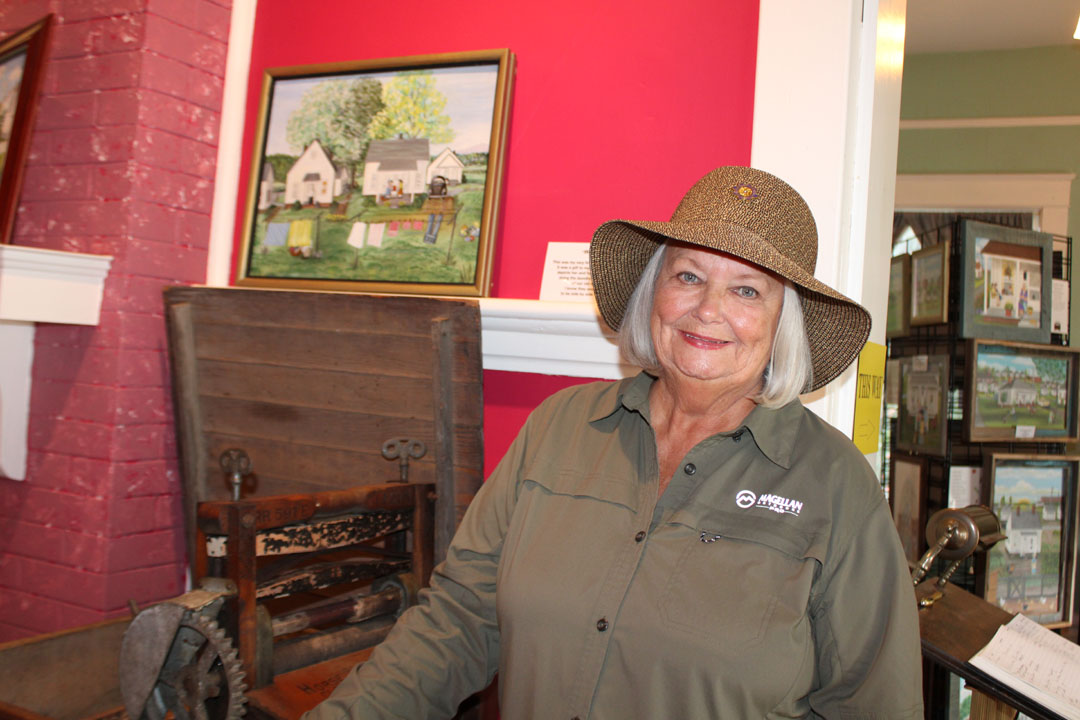
Artist Judy Aiken Young poses by her first mill village art painting, titled Wash Day, which she painted as a gift for her mother, Sudie Aiken, in 1992. The painting portrays Sudie and her friend, Bernice, washing laundry on the back porch. The painting hangs near an antique wash board on display inside the Easley Area Museum. Many of Young's mill village art paintings will be on display at the Easley Area Museum weekends through Sunday, November 2. View 41 photos of Young's mill village art on exhibit at the Easley Area Museum. (Photo by Karen Brewer, The Pickens County Chronicle)
A self-taught artist, Judy Aiken Young’s first mill village painting was a birthday gift for her late mother in 1992. “So, after I gave her that,” Young told this writer, “I thought, ‘I’ve got a lot of stories to tell.’ And I started telling them.”
Young’s mill village paintings, which tell stories of what life was like in local mill villages during the 1950’s and 1960’s, will be on display in a new exhibit, ‘Honoring our Textile Heritage’, at The Easley Area Museum weekends 1 p.m. to 5 p.m. through Sunday, November 2, 2025. Admission is free.
“Most of these take place in the ‘50’s and ‘60’s, because that’s what I knew,” said Young, who grew up in the Woodside Mill Village in Easley. “It was such a different time. It really was. We could go outside our door and have numerous kids to play with. That means a lot to a kid. We had each other all day long. When we came home from school, we had certain things to do, and then we’d go out and play until dark. The ‘50’s and ‘60’s were good times to be a kid.
“I’m glad that I have these stories that I can illustrate and tell about. I want my kids and grandkids to know about this. I want them to know what went on at the mill villages. They’re in ruins now, a lot of them. I’m glad to see a lot of them are being refurbished. They’re revitalizing a lot of them, which is good. But that simpler time and the way we lived, I wish we could get some of that back, too. We didn’t have a lot of money, but we didn’t feel poor. We had what we needed, and we had friends, and life was good. It sure was.
“My parents were my inspiration on a lot of these,” she said. “They worked in mills from the time I was a little kid until they retired.
“Our parents who worked in the mills worked hard. How the women came home, fixed a meal, and still had time to sit out on the porch — I don’t know how they did it. It was just the last of the strong breed, I think. They were an inspiration of strength, really.
“The stories behind the hard-working people – that’s what I’m passionate about.”
Jobs in mill villages were plentiful during that time, she said. “That’s when the jobs were here, before they went overseas, when textiles were at their peak. If you wanted a job, you could certainly find one. My Dad worked at Pickens for a lot of years, and then he and my Mom worked at Poe Mill in Greenville. Mom and Dad even worked at Utica Mohawk in Seneca for awhile, and they would carpool when they did that.” There were plenty of mills, she said, in Easley, Liberty, Pickens, and Central. And, no matter which mill village children grew up in, she added, “We can have the same stories.”
In addition to her parents, others have also served as inspiration for her paintings, including a family friend, Martha Browning, whose son and daughters, Wilt Browning (also author of Linthead: Growing Up in a Carolina Cotton Mill Village) and Marlene Burke and Doris Browning, wrote a book about her, titled Come Quittin’ Time. “It’s quite a story,” Young said of the book. Young’s painting titled Martha depicts this friend. “Martha is a dear old friend, a family friend,” said Young. “She was friends with Mrs. Young,” she added, “and we all went to church together. She was an amazing lady. She was a godly lady.
“She worked in the mill (Woodside). She started when she was 12 in Newry. That’s just how life was back then, before the child labor laws. She was a very strong woman.”
Pointing to the painting, she said, “And I love this story of her husband. This is Fourth Street at Woodside. Her husband would go sit on the curb, and he could see all of the way out the road, and he’d watch for her to come home. He was on the first (shift), and she was on the second. I thought that was a sweet story, that he’d watch for her.
“But it was a safe time back then. My Mom used to walk home, but the neighborhood dog would walk with her.”
In one of Young’s paintings, titled Changing Shifts, she pointed out that men wore overalls and carried black lunch boxes. “My mom always looked so pretty going to work,” she added. “She had on these full skirts and little socks and shoes and always the apron to keep tools in. But she would bring home snacks in those pockets. I was always happy to see her for that reason, too.”
Another painting is titled Under the Chinaberry Tree, and another is titled Picking Chinaberries. “They were very smelly, but, when you’re a little kid, you don’t care,” she said. “I used to make necklaces and bracelets, even rings, threading chinaberries.”
Pointing to the painting titled Summer Theater, she said, “There is an historical moment involved in this house right here. See this window? My Dad and another man took the tv, the big box tv — they were real clunky back then – they took it out this window, and that was quite a feat, getting it out the window, and they plugged it up. It was on a Sunday night.” She was a very small girl, she said, adding, “And I did not appreciate this moment in time as much as I do now. All of the neighbors on the street came down, got a chair, and sat around the tv, and we watched Elvis on The Ed Sullivan Show for his first tv appearance. I love that story. I didn’t appreciate Elvis as much as I do now.”
In her painting First Set of Wheels, she pointed out the cogwheel wagons. “Riding cogwheel wagons — I don’t know how we lived to tell about it. Those things were so dangerous — no brakes. During that time, you knew someone that had a cogwheel wagon.”
Her friend Kathy Talley persuaded her to paint her painting titled Fun at the Talleys. “It was a unique place,” Young said of the Talleys’ home, where the father, Jonah, raised peacocks and the mother, Viola, helped raise kids from around the neighborhood who were often at their home.
Referring to her painting Snapping Beans and Singing, she said, “We sat on the porch a lot. That’s just where we lived. That’s where the action was, somebody’s porch. We really did this – sit on the porch, swinging and singing, “He’s Got the Whole World in His Hands” and “Do Lord.””
Her painting Mill Hill Idol portrays a young boy, with a guitar, sitting on a porch. Pointing out the two doors, she said, “In the early mill days, before they sold the houses to employees, two families would live there. It was like a duplex.”
Referring to her painting Mill Village Christmas, she said, “We don’t have much snow around here, but I put a store-bought sled on that, and, then, I thought, ‘We didn’t have store-bought sleds. We used cardboard and a car hood. Some of the guys found a car hood one time. It was a spare part. We pulled it up to the top of the hill. That held a lot of kids. We’d all get on it and slide down — I mean with no control. I don’t know how we’re alive to tell about it.”
One painting is titled Wash Day and another Drying Time. “I have a lot of wash day paintings,” she said, “because I like wash day. It’s interesting to paint.” She added, “That’s where you caught up on the latest.”
A painting titled Future Big Leagues portrays the sport of baseball. “That’s one of my later ones,” she said. “Baseball was the sport back in the day. And the girls had a girls’ softball team, too.”
One of Young’s paintings is titled Back Yard at Granny’s. “On this one, the houses were not underpinned,” she said. “That’s how it was, back, I think, before the ‘50’s. I don’t remember that. Most of the houses had been underpinned. But I tried to capture this, because this kind of looks like my grandmother’s house, and they lived there probably sixty something years, and that’s how it looked when they first moved there. But they made use of all their land, every spot. That’s what I admire about them. They didn’t waste anything. They made use of what land they had. And, even in the house, they would save things. They were just good, hardworking people.
“And a lot of them lived on farms, and they came into the villages to work in the mills, and, so, they brought those skills with them. And, even though there’s a house close, they still had a back yard, and that’s why I called it Back Yard at Granny’s, because she had all these things, little crops and everything. And it was just so special, seeing all that growing up. And I know I’m not the only one. That’s how life was.”
Another painting is titled Going Crusin’. “It didn’t matter if you were a Green Wave, a Blue Flame, a Red Devil, or from Greenville,” she said. “Everybody came together on Fridays, Saturdays, and Sundays, and that’s all we did.”
One of her paintings is titled Knight’s Store. “This is a real place. It’s on Jones Avenue, the old Jones Avenue. The building is still there, but the signage is gone. It’s been painted over. If you ride down that road, you’ll see that little white building. This was the meeting place between my house and David’s (her husband’s) house. I wrote a poem about it. That’s where all the people in the neighborhood shopped. It was good to have a little store.
“David was my inspiration when he was telling about being a little boy, and they would take their drink bottles and get their deposit back, and they’d have money to buy candy and whatever. They had a gumball machine, and it would have a speckled ball in it, and, if you got one of those speckled gumballs, then they would give you a nickel so you could buy more candy. It was just a cool thing back then.”
The painting Front Porch Politics portrays men sitting on a porch, playing checkers, reading a newspaper, and talking. “Guys would talk about politics on porches,” she said. “That’s just how it was. I’m pretty sure they talked about all sorts of things, like the women.”
The painting Summer Fun shows the ice cream truck that would visit the neighborhoods. “I remember being 16, and a bunch of us kids were playing ball at the ballpark, and the ice cream truck came right outside the ballpark,” she said. “And my little brother was at the Talleys’ house. He got an ice cream, and he walked out, and a car hit him. The man wasn’t going very fast, and he was the nicest man ever. It was so sad that had to happen to him. He wouldn’t hurt a fly. It was just a total accident. But my brother lived to tell about it. He got free ice cream for a long time after that. I think he wore it out.”
Another painting is titled Opry Saturday Night. “This is my inside picture,” she said. “You can see out the windows here, and you’ve got a church and a mill and everyone gathered around to listen to The Grand Ole Opry.”
Another painting is titled No Need for a Phone. “This one is called No Need for a Phone,” she said, “because, when your houses are close together and everyone stays out on the porch anyway, you just holler at them. Even if you were on the phone, they had a party line, and people listened in, so, if you had a secret, you just better walk over and tell them in person.”
This painting shows three different churches within close proximity. “I didn’t appreciate this when I was a child,” she said, “but, the older I got, the more I appreciated our religious freedom, how important it is. We had a church on every corner, just about. We had the Methodist, we had the Baptist, we had the Church of God, we had the Wesleyan church, and all you had to do was walk out your street. There was another church here. There were two more this way. And I lived on the other side of this area. And I never appreciated that growing up, but now I do. We just had so many options. I appreciate that these days. Most of them are still there.”
Another painting is titled Gardening in Graniteville. “I just wanted to paint those houses,” she said. “Aren’t they beautiful? And their mill village has a bell in their bell tower. And that’s why we went down there. I think the bell was missing, and we didn’t get any pictures of the bell tower. But I just wanted to paint those houses, and I included it in this, even though it’s not in our area.”
She and her husband, David, have traveled to many different mill villages, so that she can take photos of them before painting. “David has driven me all around in the Upstate, wherever they have a mill village,” she said. “I like to go and take my own pictures of the different style houses. I’ve taken so many pictures.”
She said she tries to incorporate the different style of houses in her artwork. Sometimes, one mill village might look similar to another. “This looks like Arial,” she said of one painting. “But Judson in Greenville looks like this, too. It’s good that it turns out that way, because a lot of people look at it, and it could be either one.
“The reason I don’t paint house for house, street for street, is because of the change over the years. They’re going to look different in some way.
“And, as far as the mills go, now they have all of the windows bricked up. Before the ‘50’s, the windows used to have glass panes in them, and, when they added air conditioning, that was a big help — if you were a worker and you had air conditioning. But they had problems with humidity, so they had to make sure the humidity was right when they installed the air conditioners, so that’s why the windows are boarded up. And that happened in the ‘50’s. There are so many air condition units outside, if you look at any mill these days, you can hardly see the true structure of the mill. It’s got so much equipment outside now.”
Young has written three books. One is titled Artistes for the Lord. “That’s how it’s spelled,” she said. “I got that name from my granddaughter. When she was five, we were doing some posters for church, and we were sitting there with all of our markers, and, all at once, she said, ‘Grandma, we’re artistes for the Lord.’ And I thought that was so sweet. I said, ‘Yes, we are, and, if I’m going to be one, that’s the kind I want to be.’ So, that stuck with me all these years. I wanted to write a book about my journey, my faith journey, life journey, artistic journey, because it all played together. I was strengthened by my faith. It was all about God’s timing. That’s what it is. I tell people, ‘I’m not an author. I just had a story to tell, and I wanted to be the one to tell it, and so I did.’
“The second book is called Smokestacks, Water Tanks, and Steeples, and I got to tell about my paintings in it. I wanted to tell about the people behind the pictures. Somebody inspired me, in some way, to either paint them or tell about them, and, so, that’s why I wanted to do that second book.”
A third book, Cousin Helen Remembers, A Cousin Collaboration, was transcribed and written by Young and edited and co-written by Young’s cousin Elaine Garrick Simmons. “She was very dear to me,” Young said of her cousin Helen, “and I recorded her history. When she got really sick, we started doing recordings. Most of it is of when she was a child. I did that as a gift to her.”
Young has worked as an artist for many years in several genres and has painted hundreds of murals in homes, schools, churches, hospitals, businesses, and other locations. Through her mill village folk art, though, she is able to pay tribute to her parents and others who worked in the cotton mills and lived in those neighborhoods, and she is able to tell and preserve their stories.
And many of her mill village folk art paintings will be on display weekend at the Easley Area Museum through Sunday, November 2.
“I am thankful that God continues to open doors and put good people in my path,” she said.
The Easley Area Museum is located at 201 South Pendleton Street.
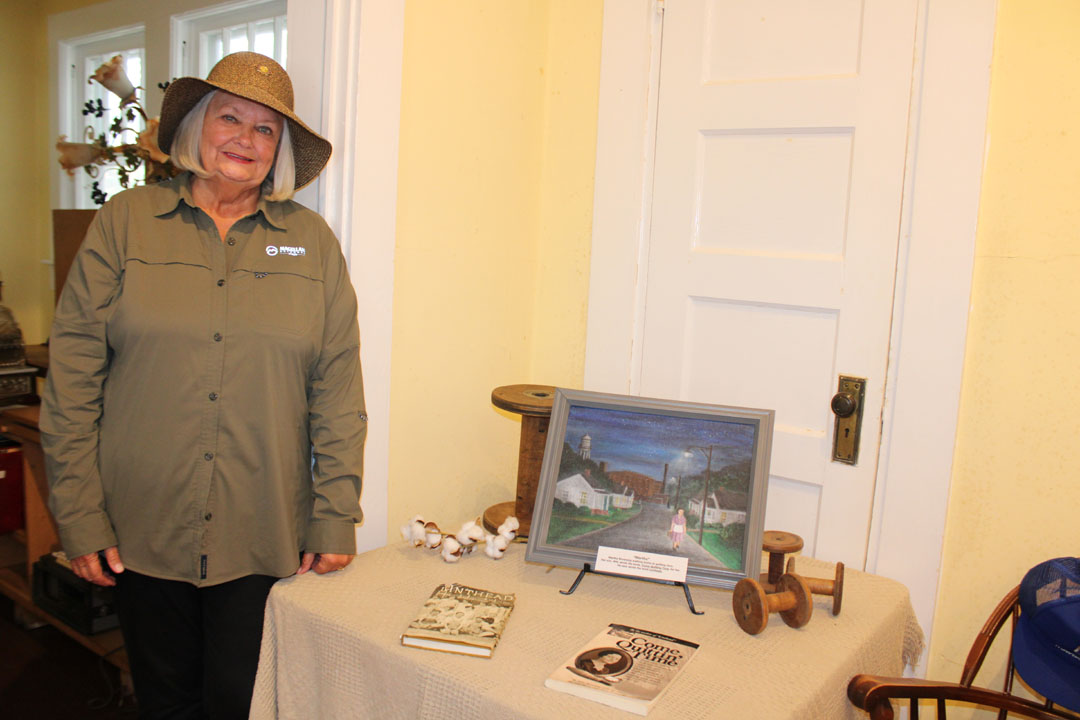
Artist Judy Aiken Young with one of her paintings, titled Martha, which depicts a family friend named Martha Browning. Also displayed on the table are the book Linthead: Growing Up in a Carolina Cotton Mill Village, written by Martha's son, Wilt Browning, and the book Come Quitin' Time, written about Martha by her son, Wilt Browning, and daughters, Marlene Burke and Doris Browning. (Photo by Karen Brewer, The Pickens County Chronicle)
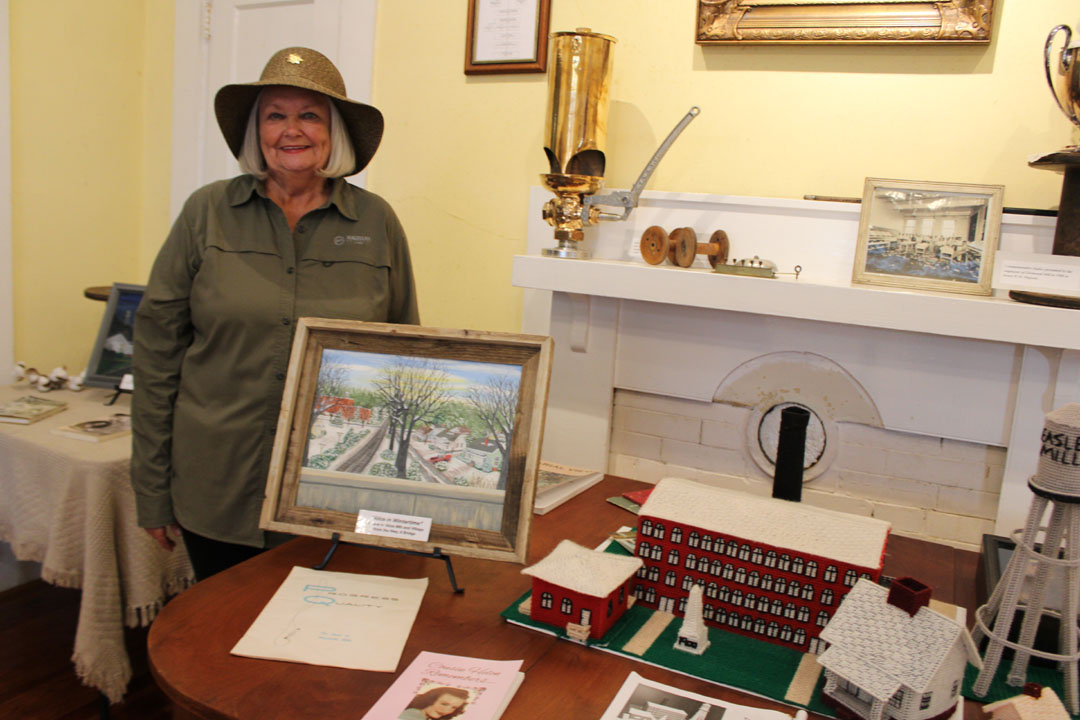
Artist Judy Aiken Young with her painting Alice in Wintertime, which depicts a view of the Alice Mill and village in the snow from the view of the Highway 8 bridge (Photo by Karen Brewer, The Pickens County Chronicle)
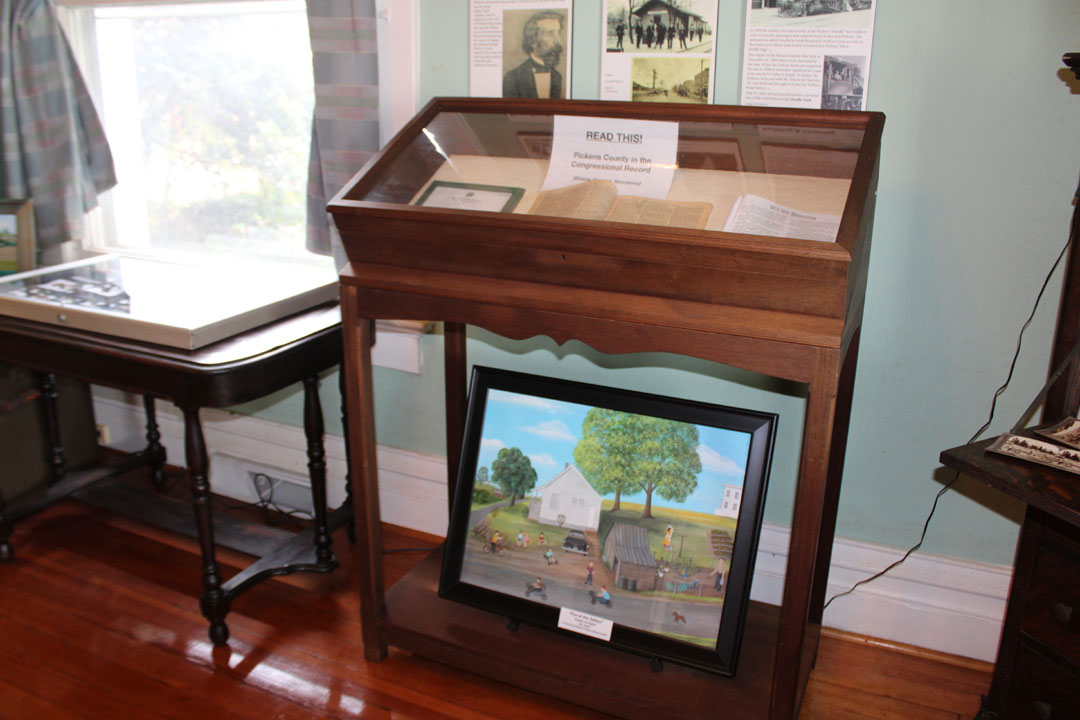
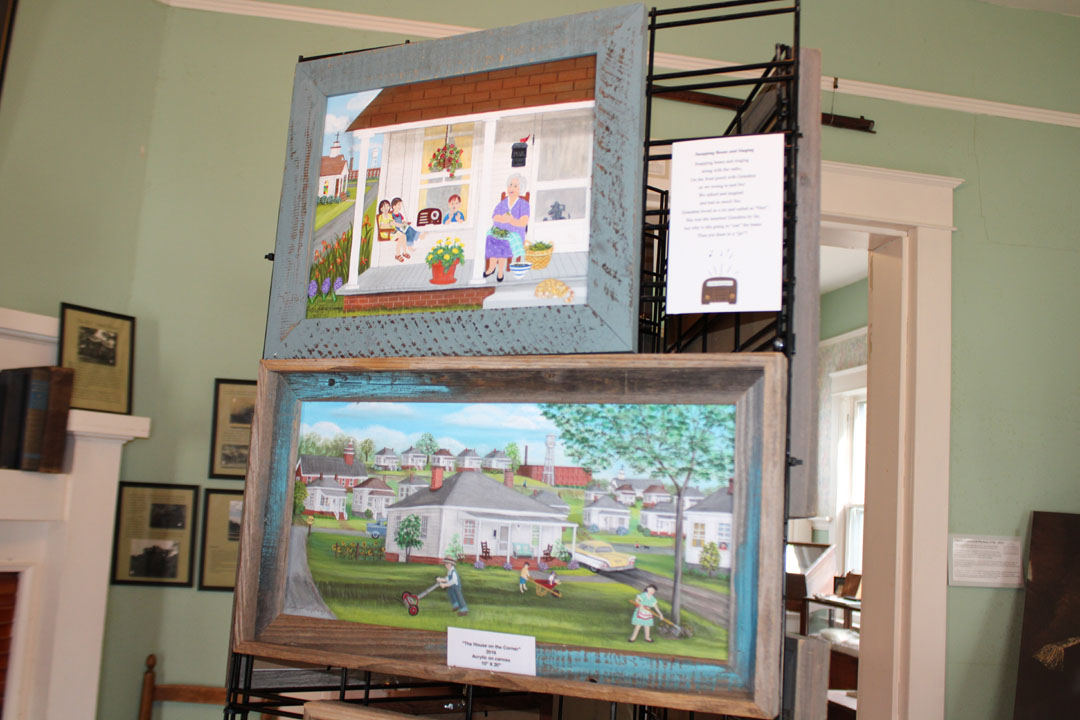
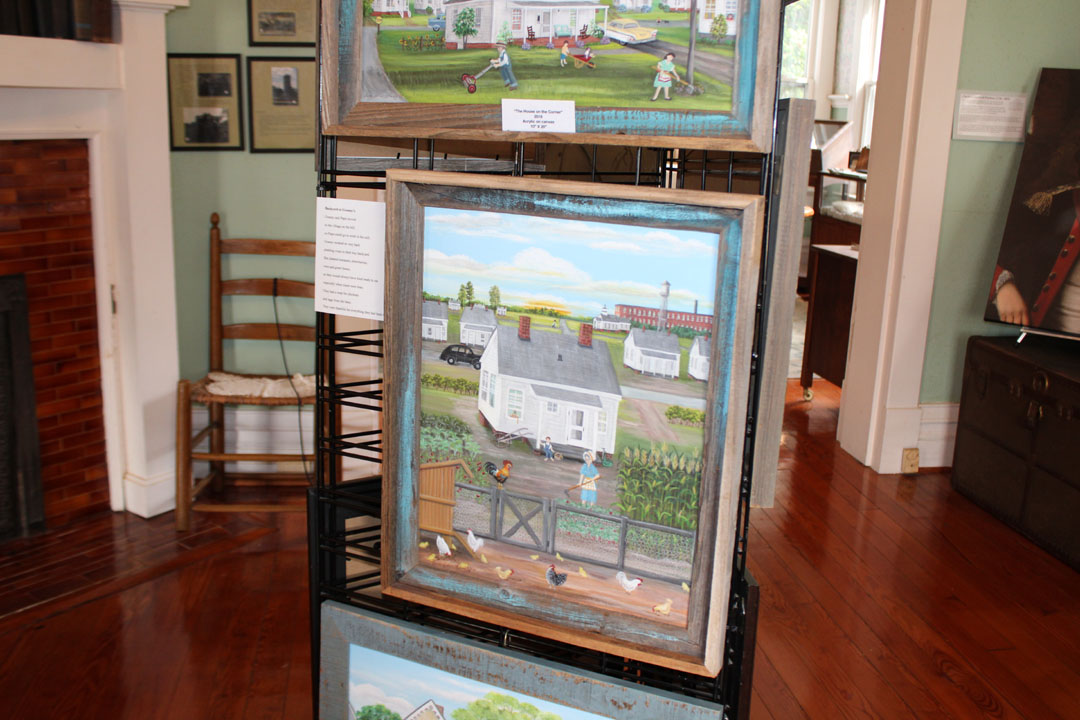
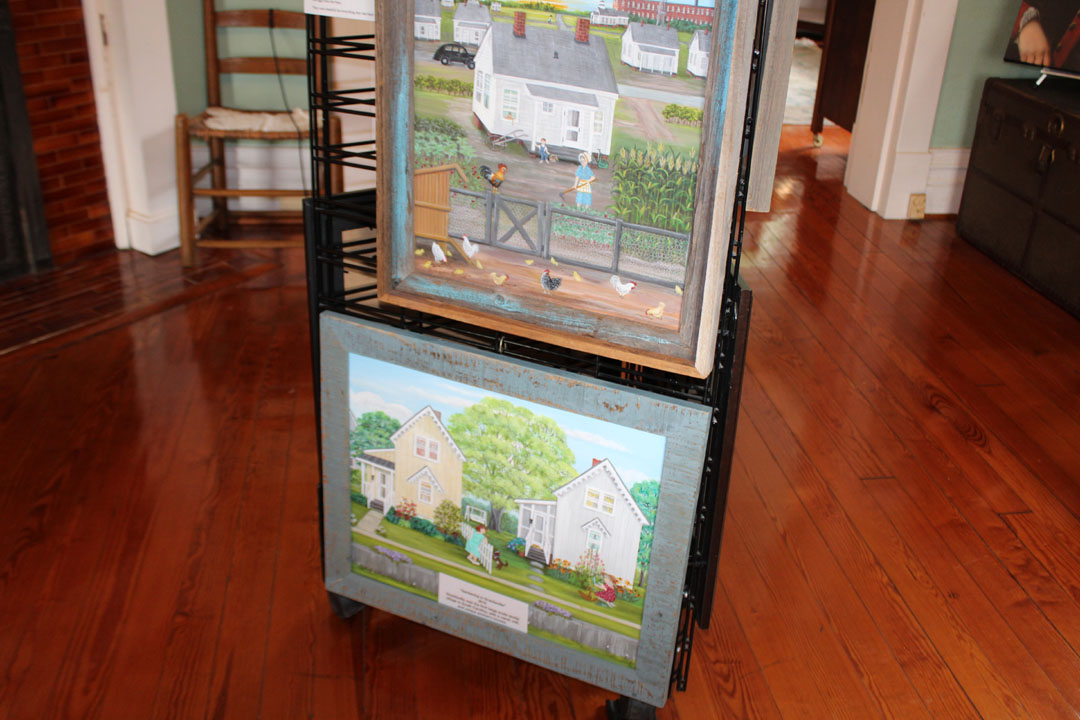
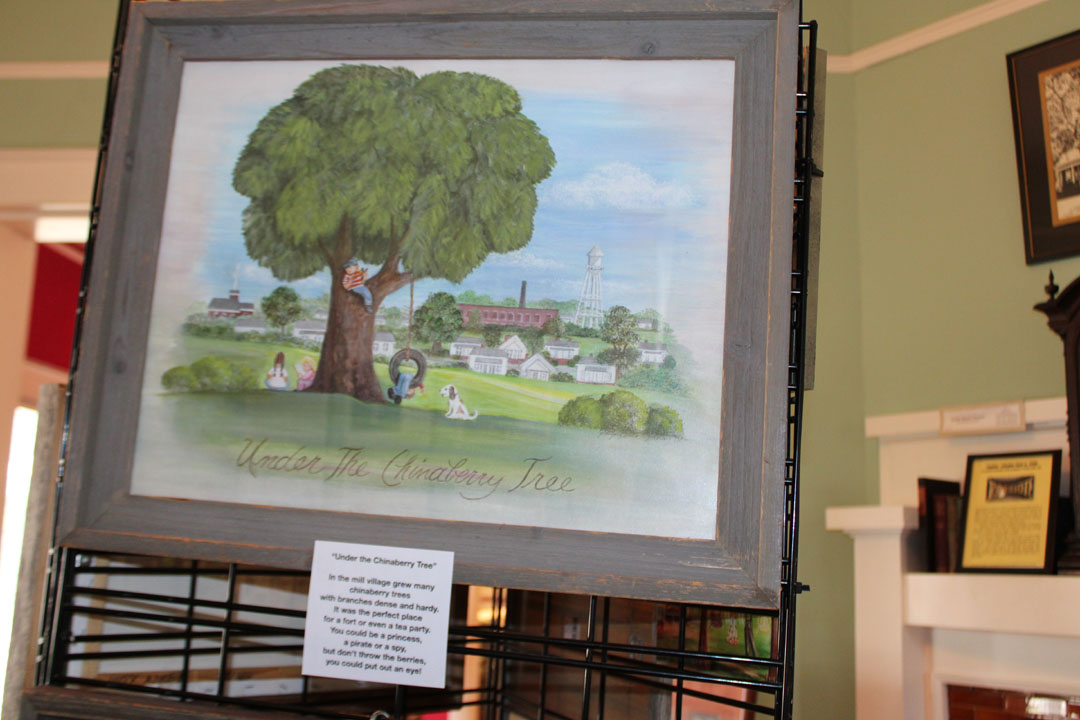
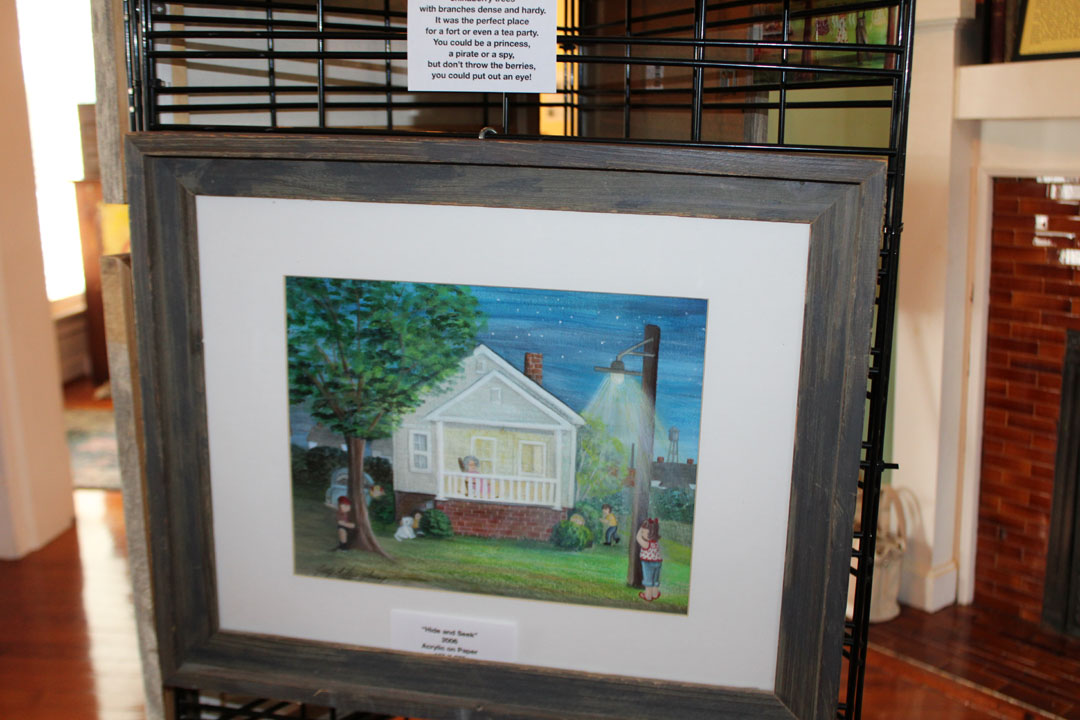
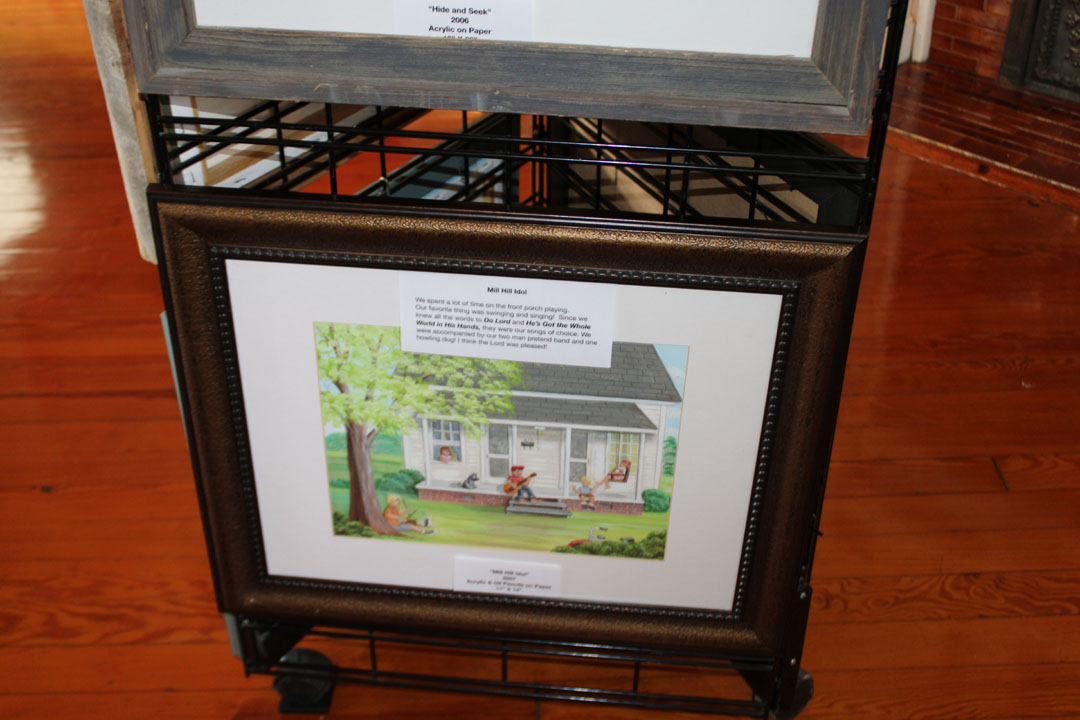
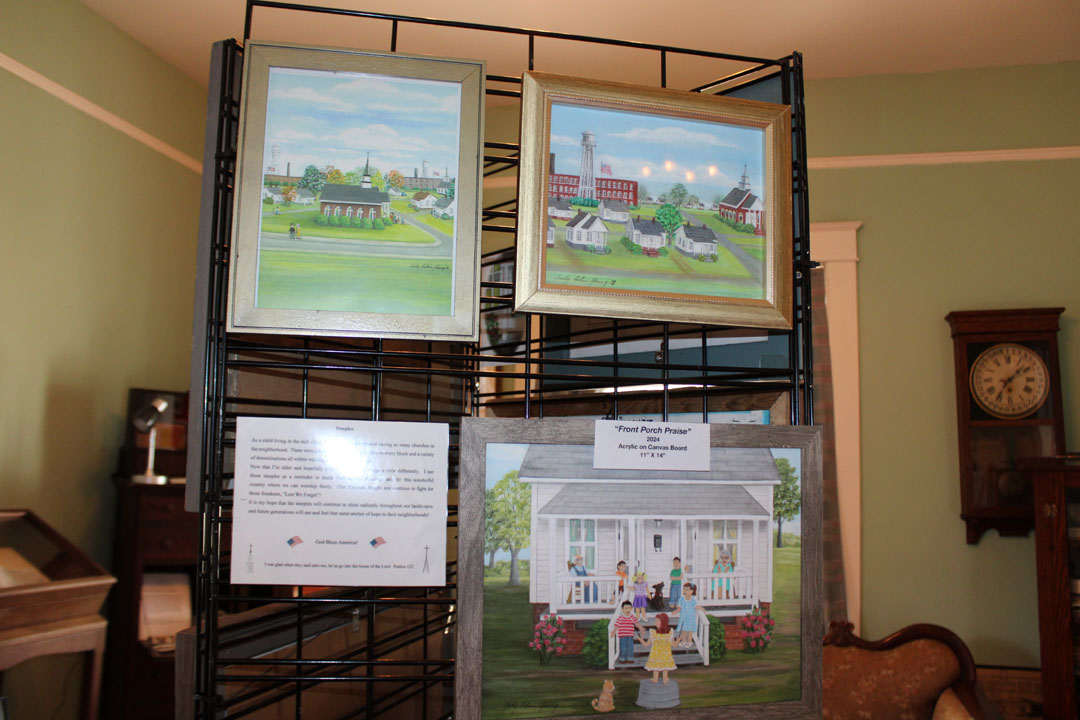
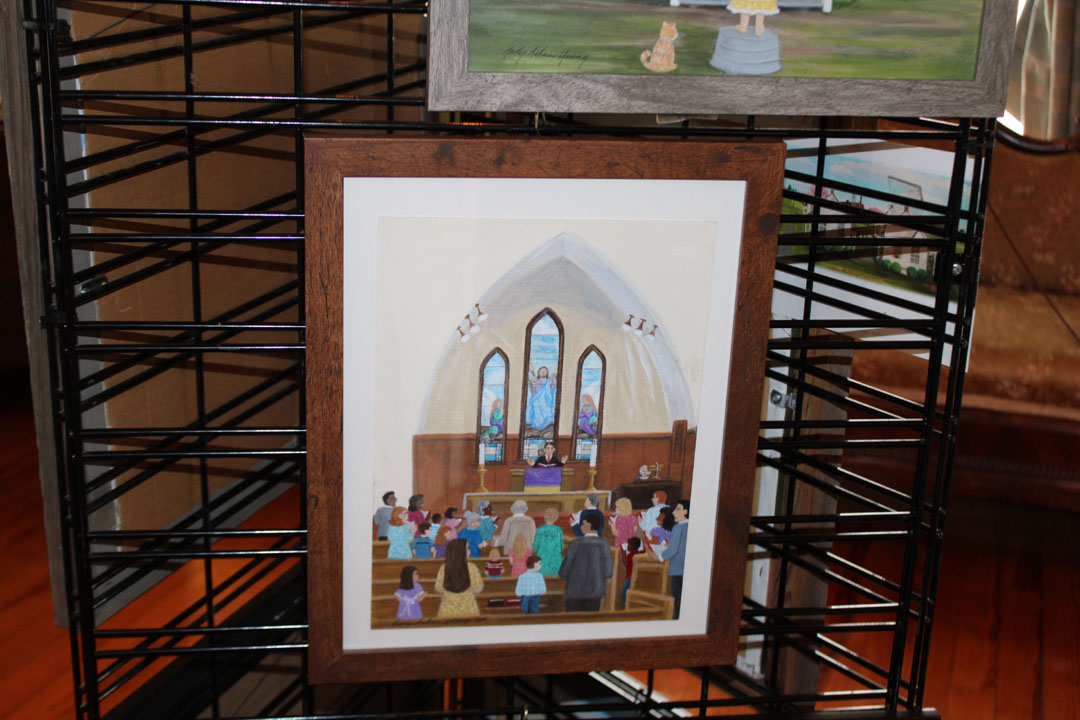
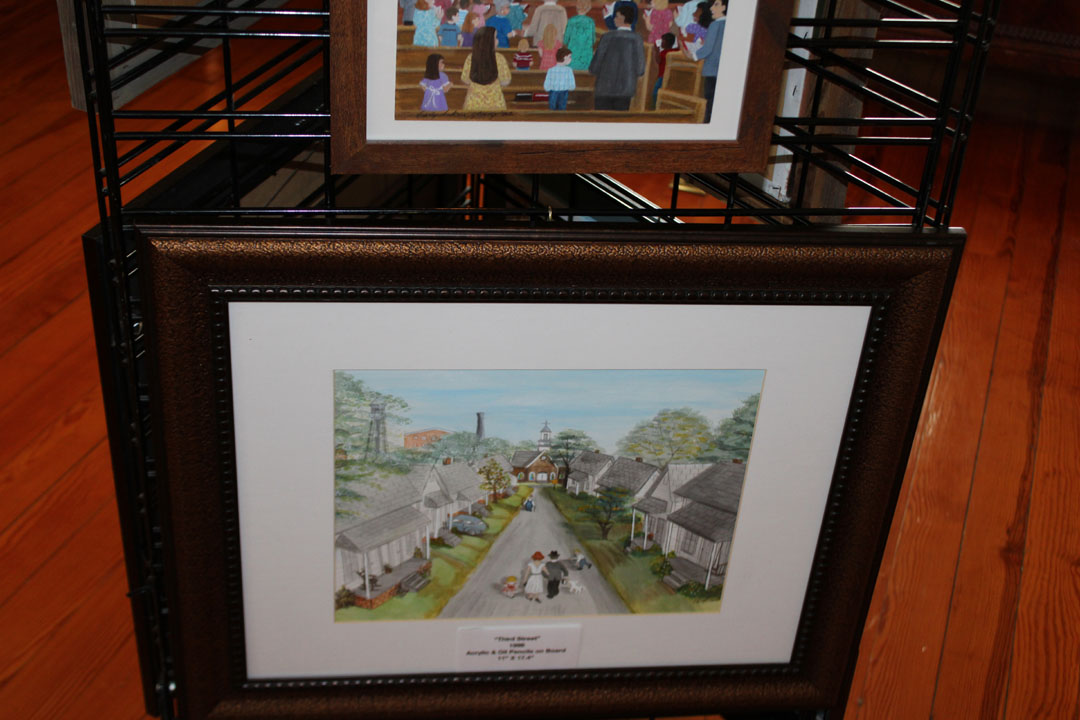
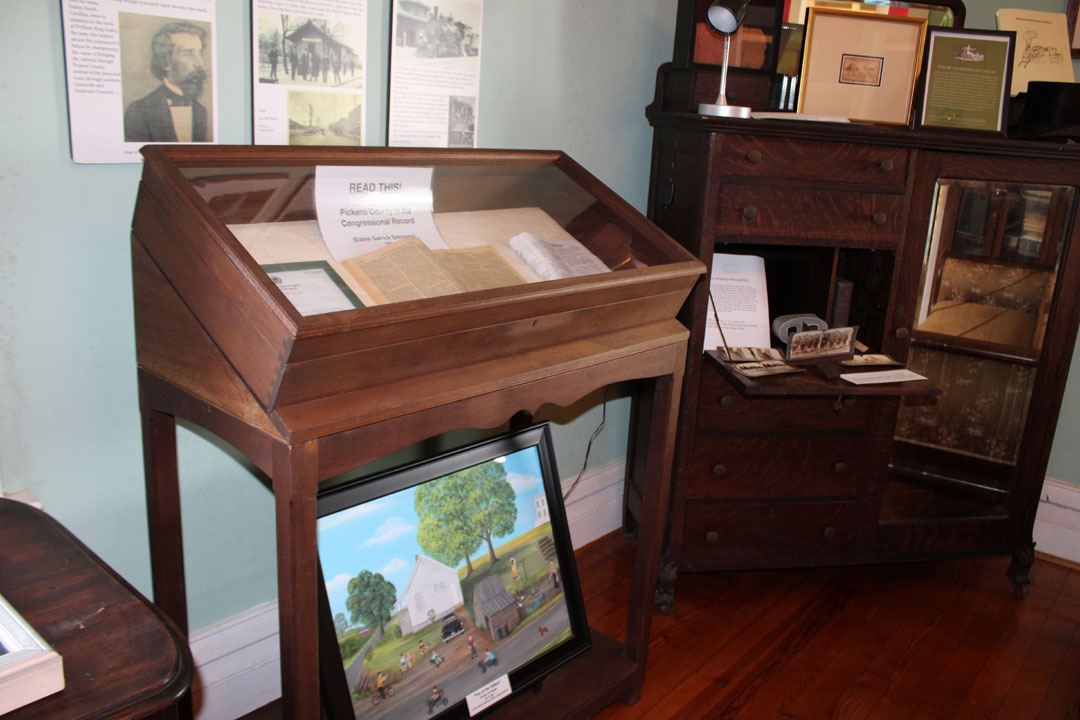
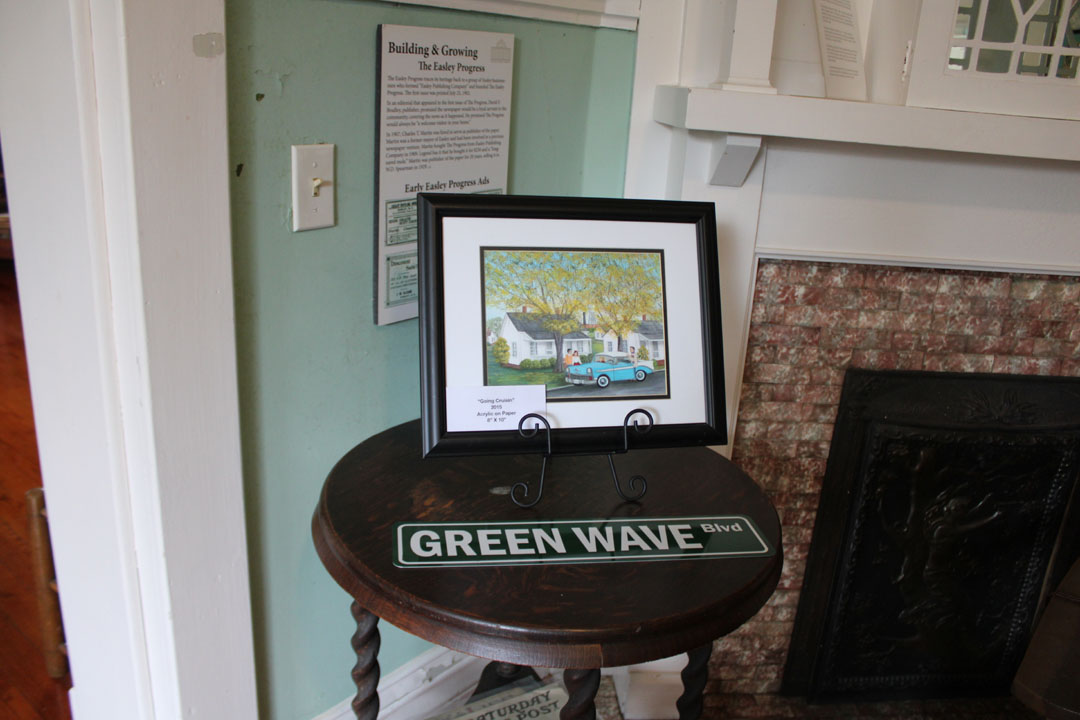
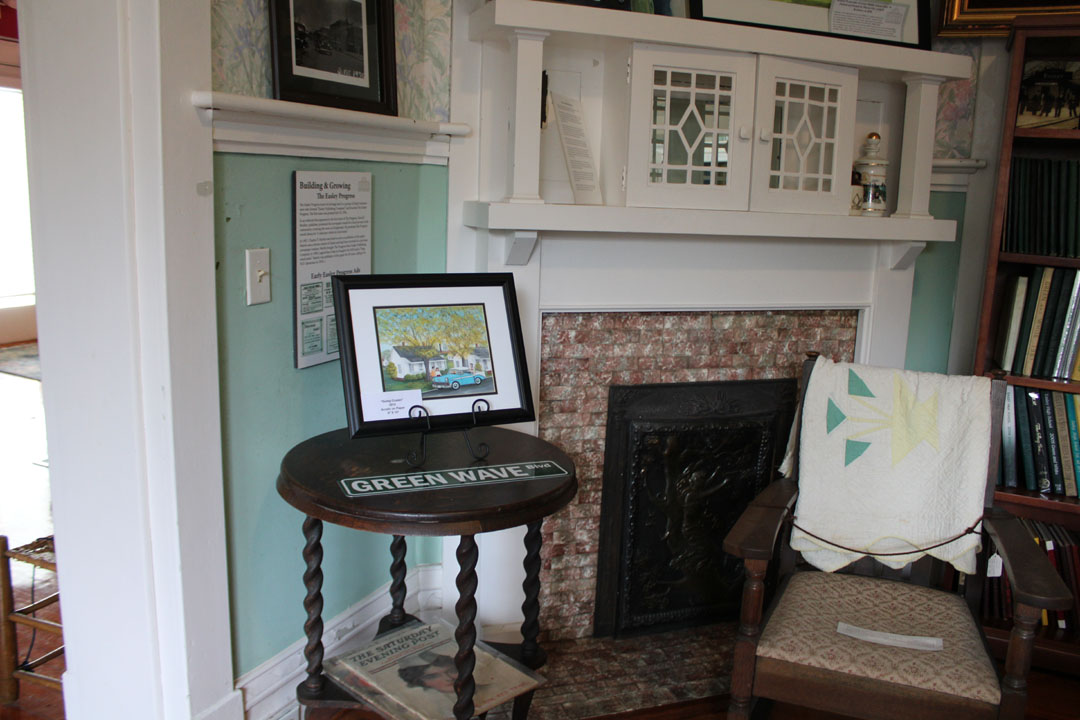
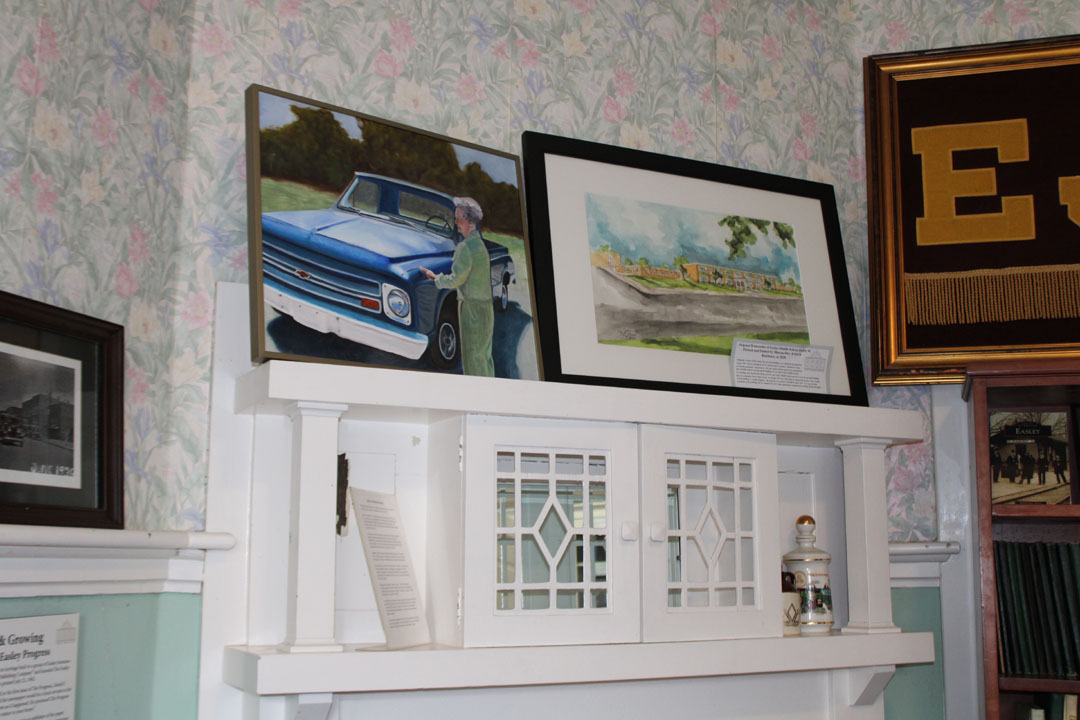
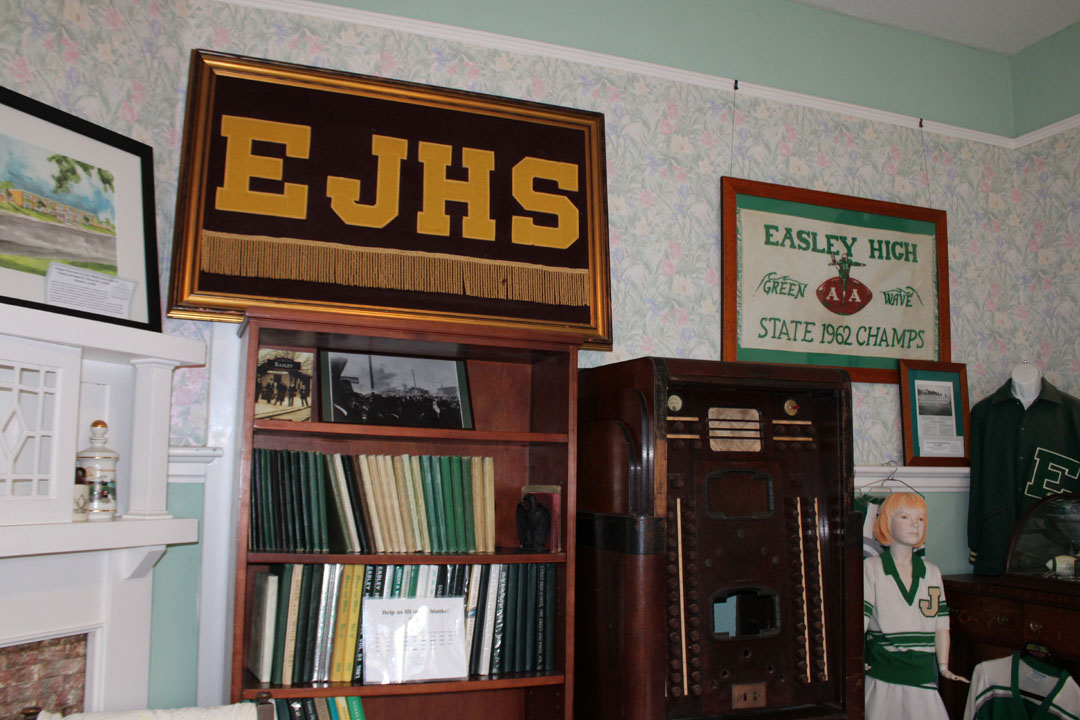
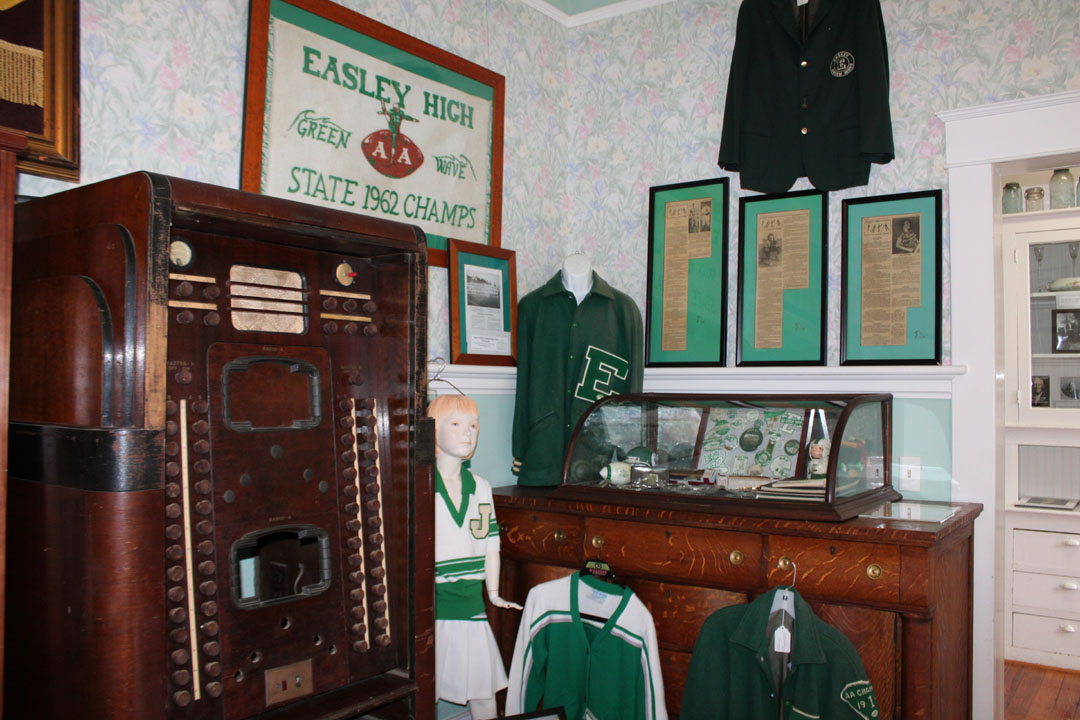
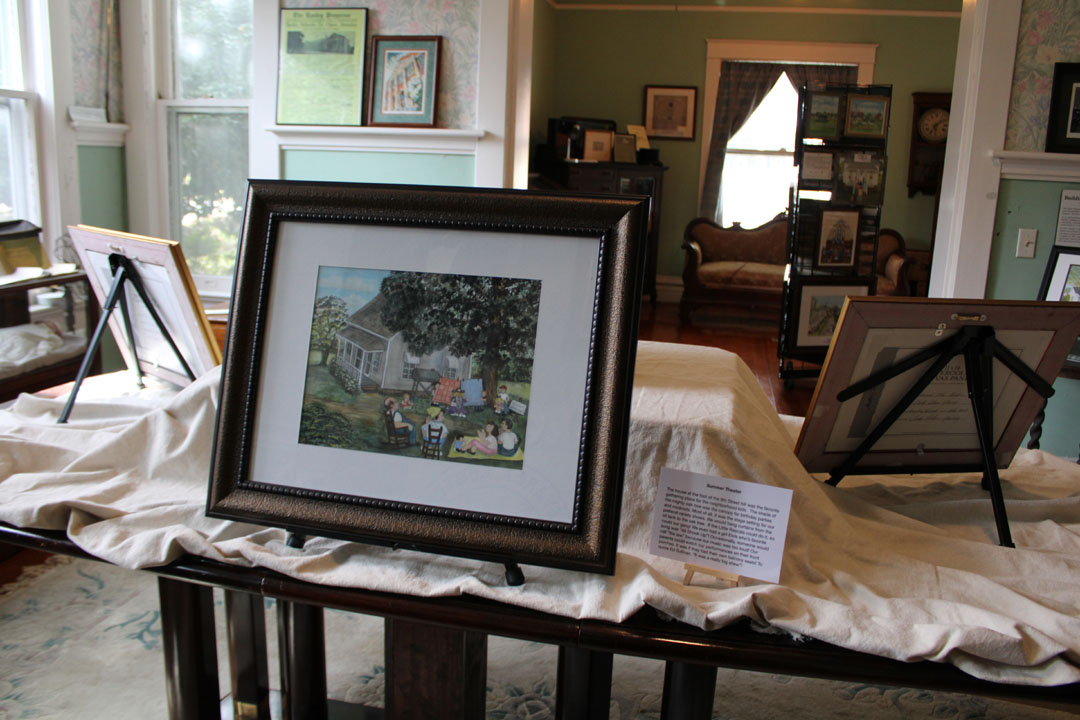
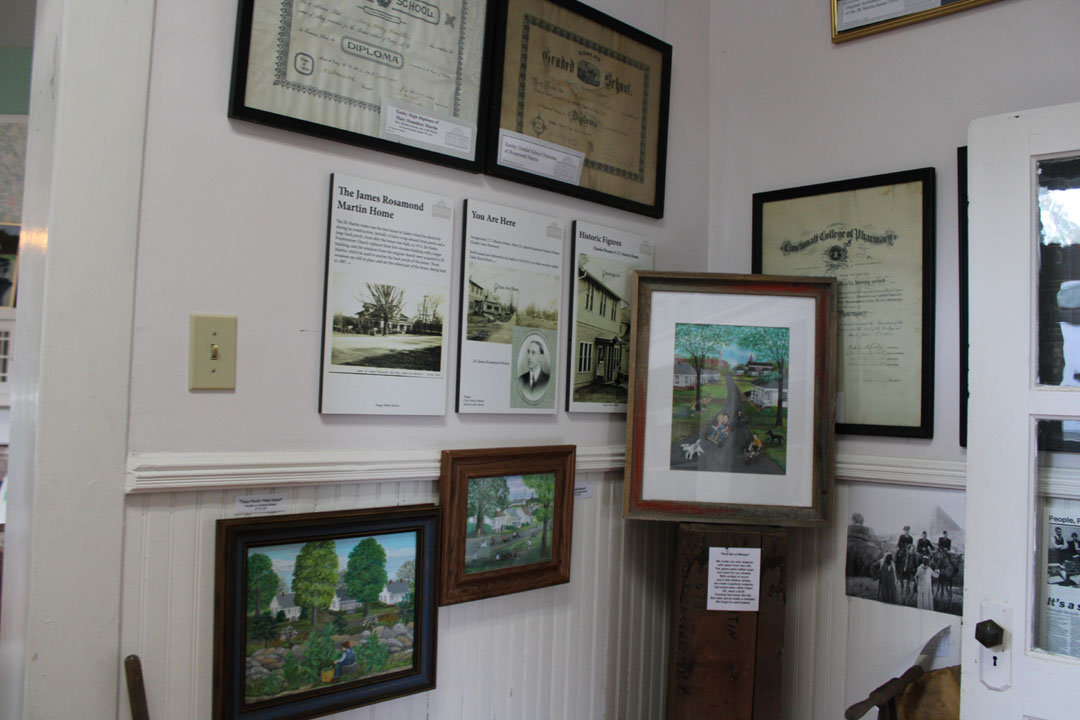
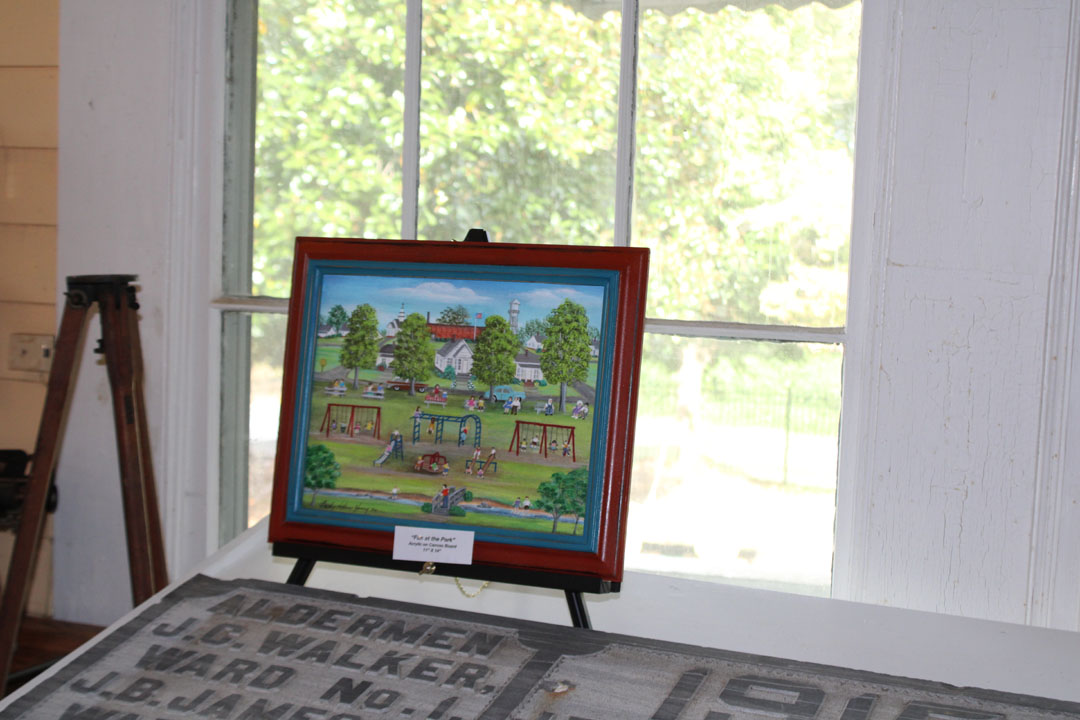
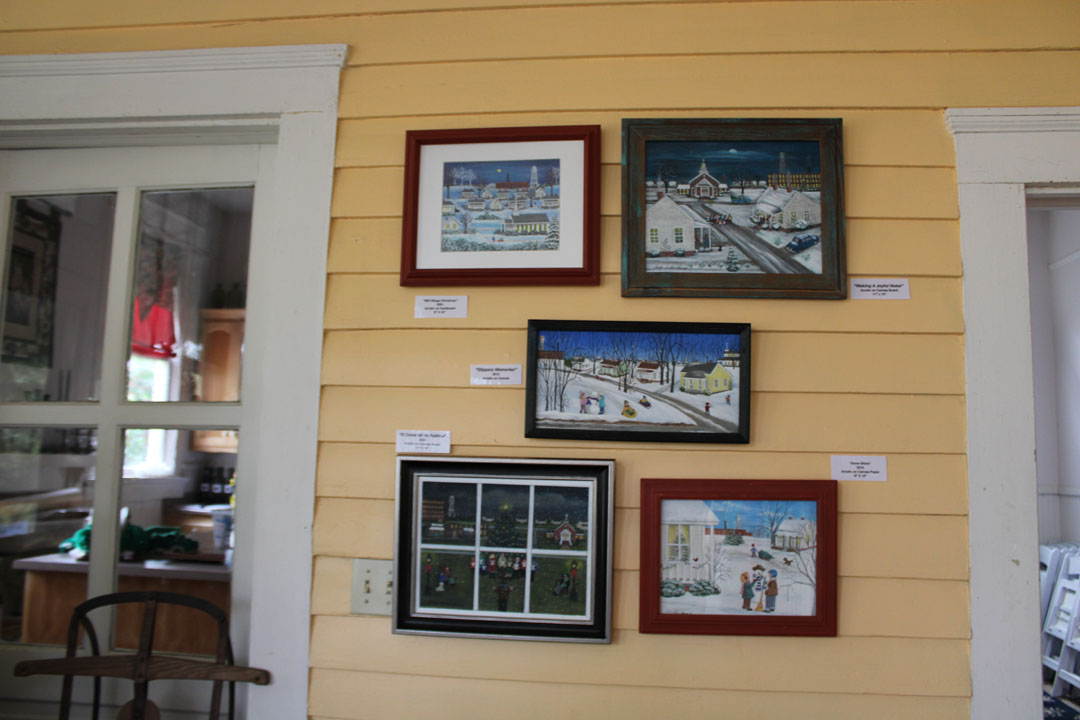
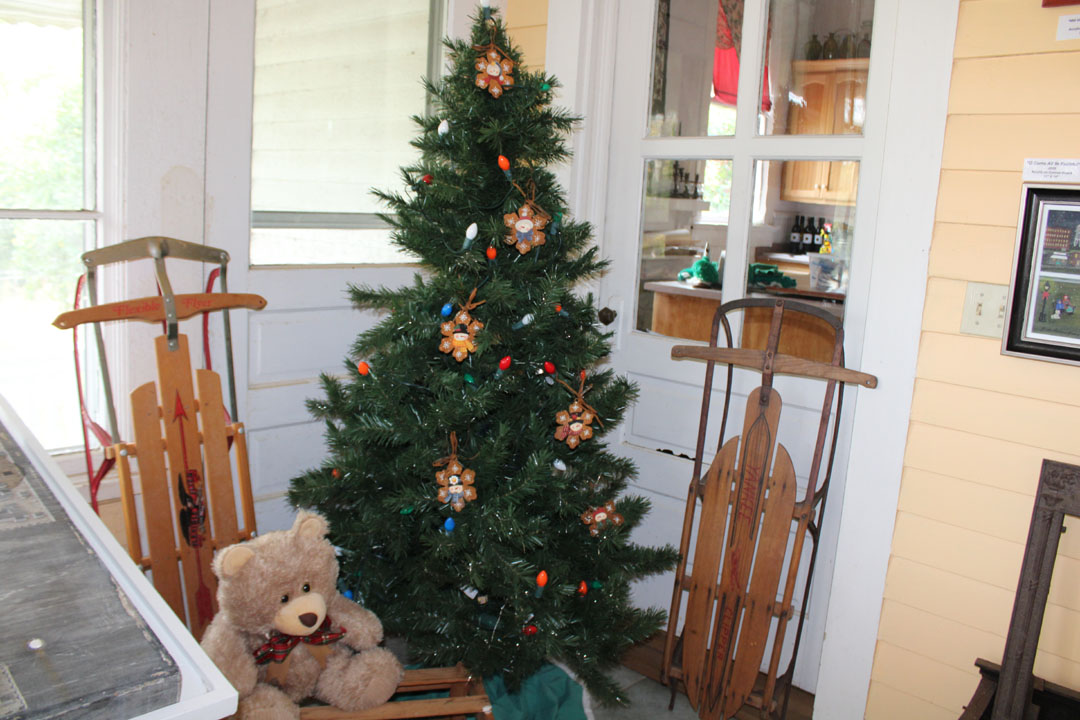
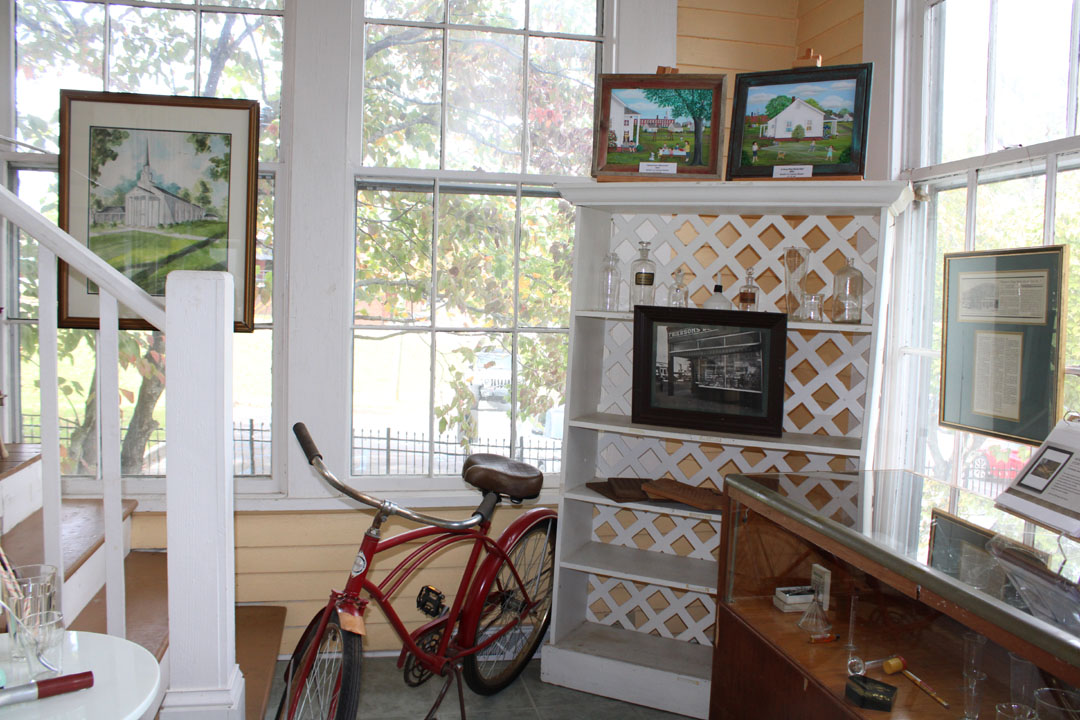
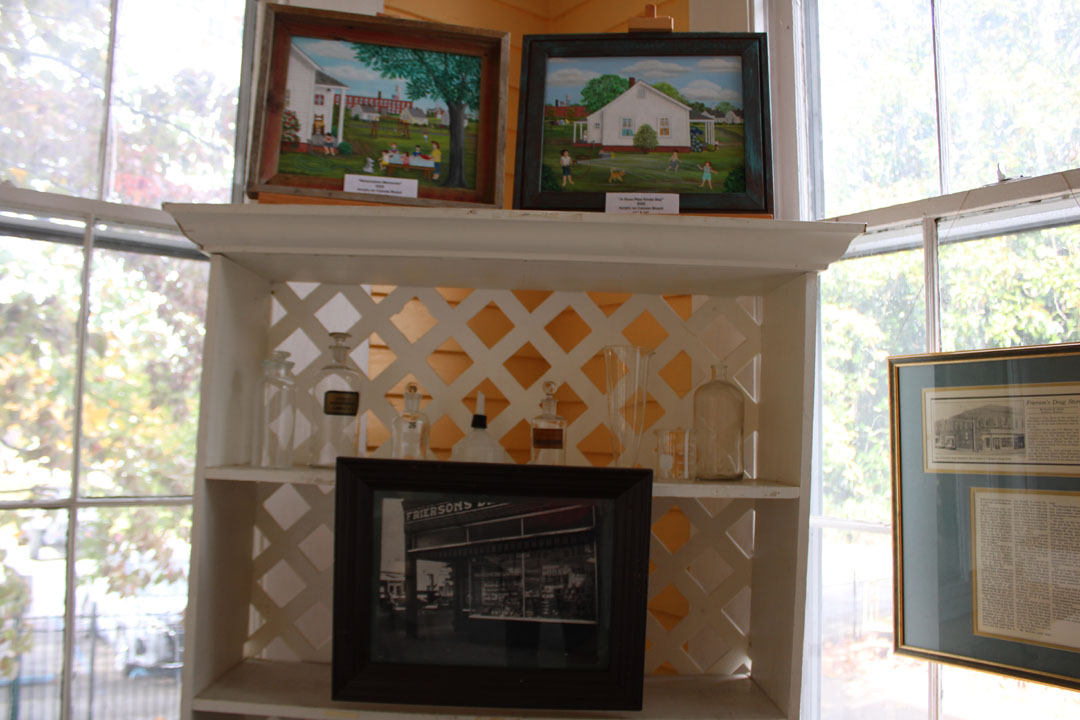
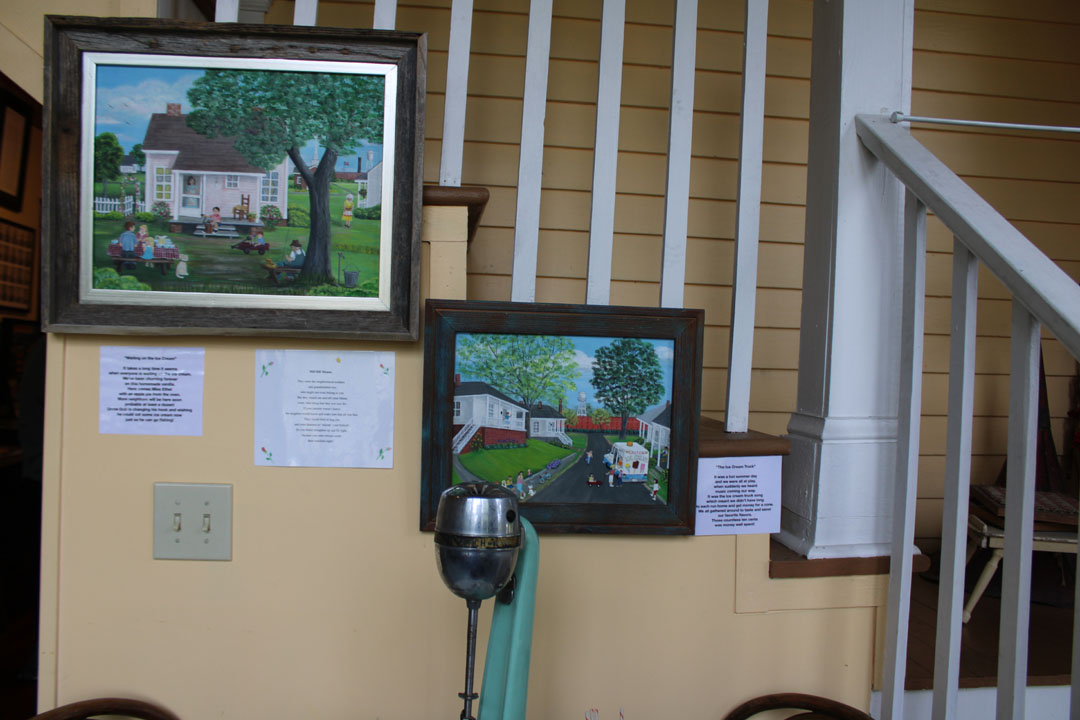
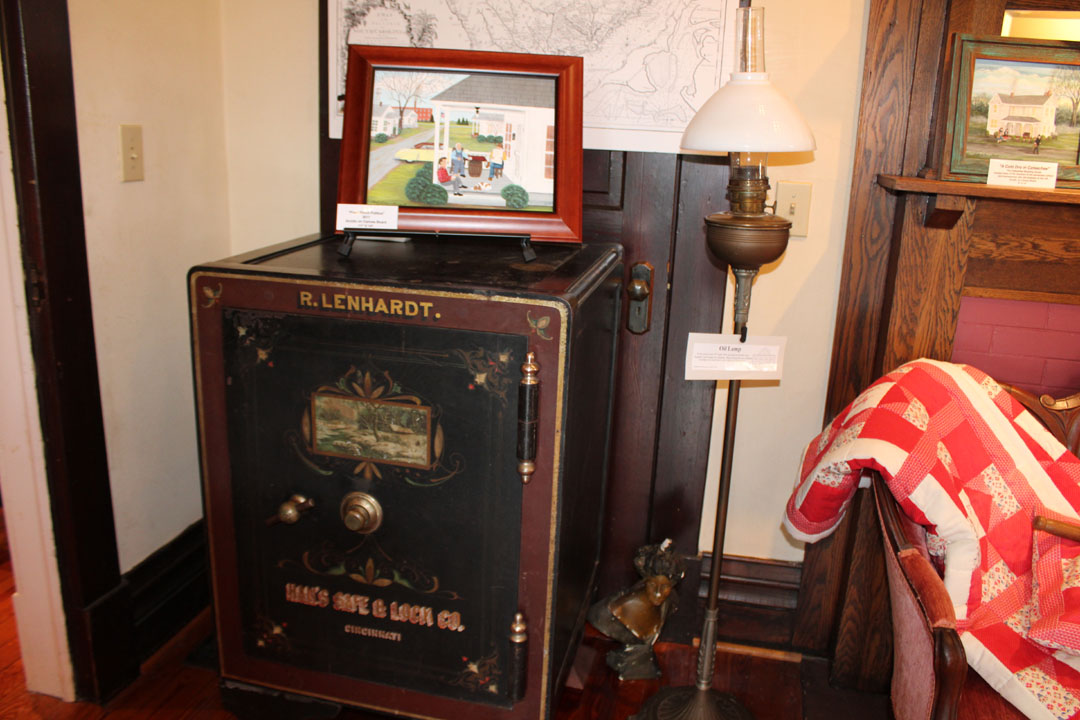
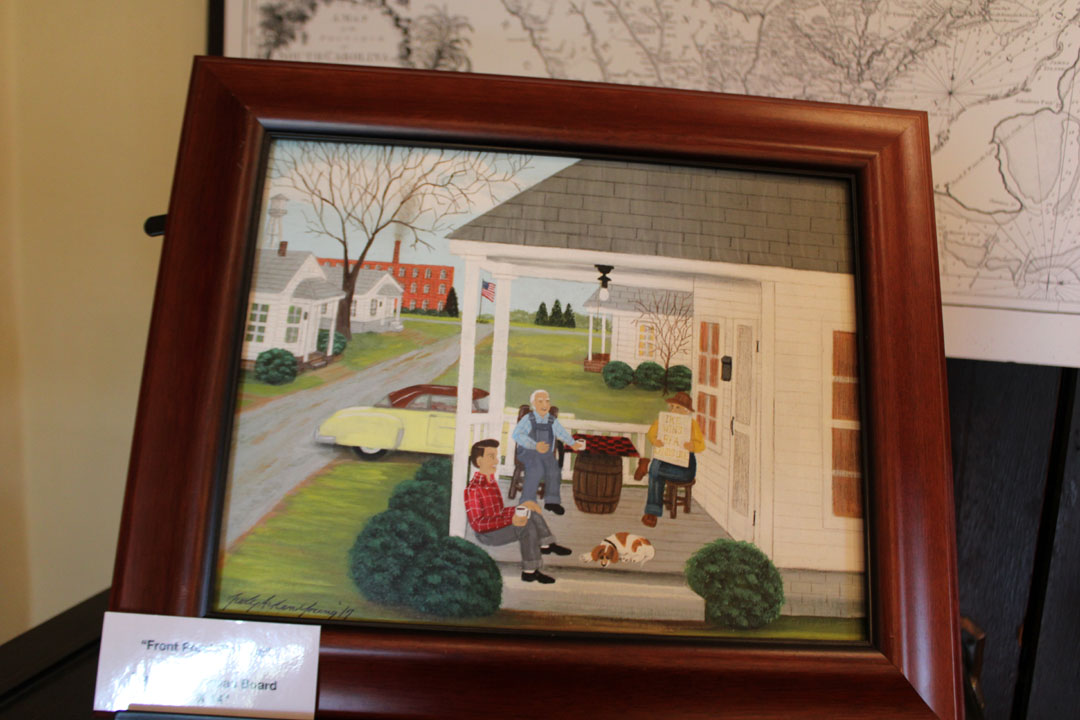
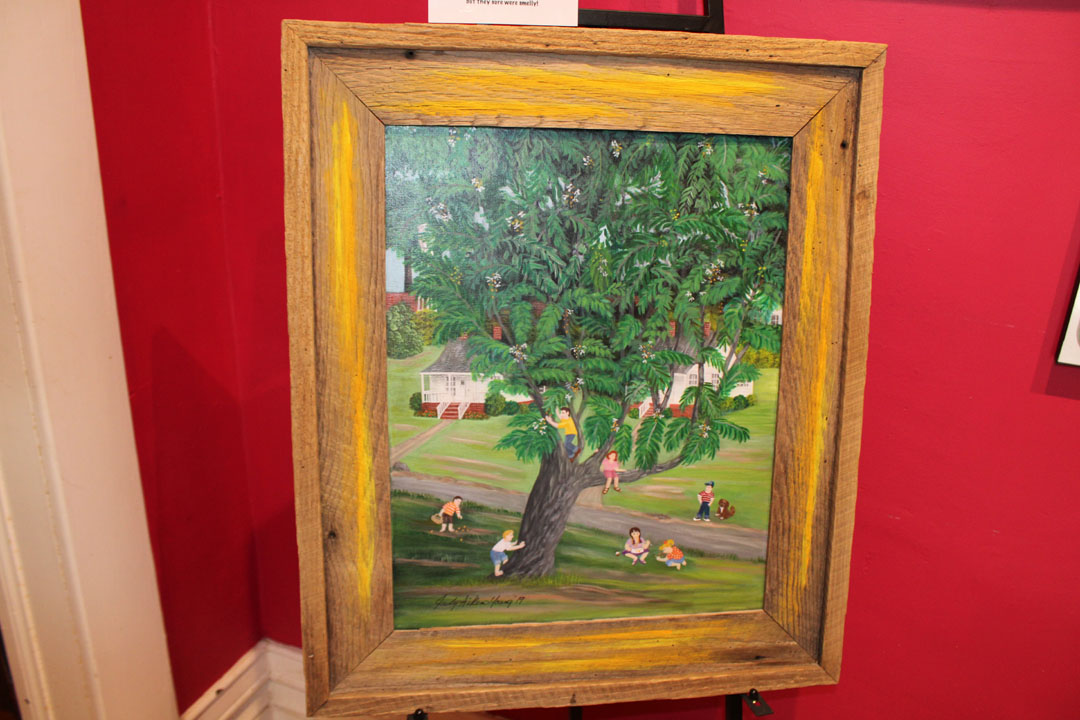
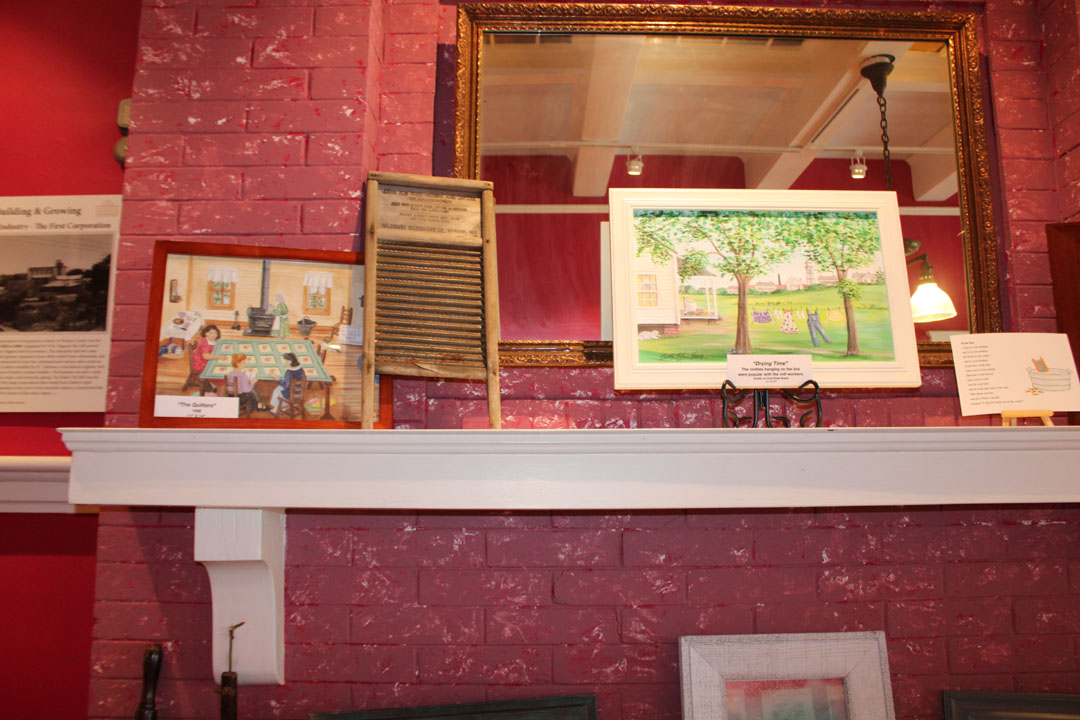
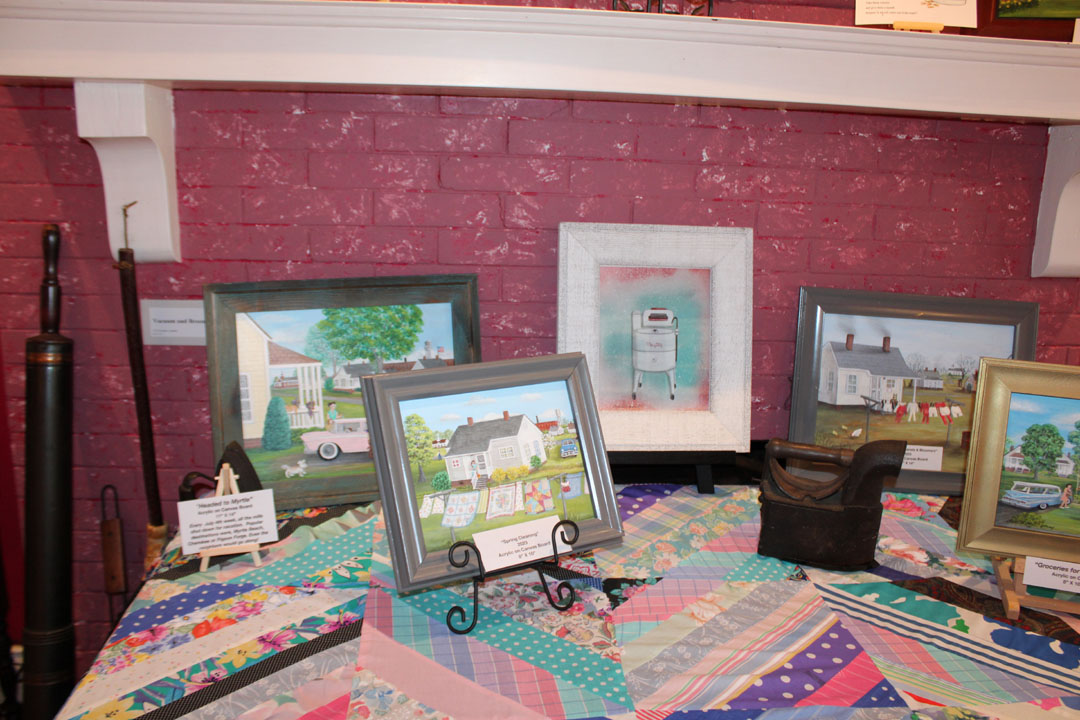
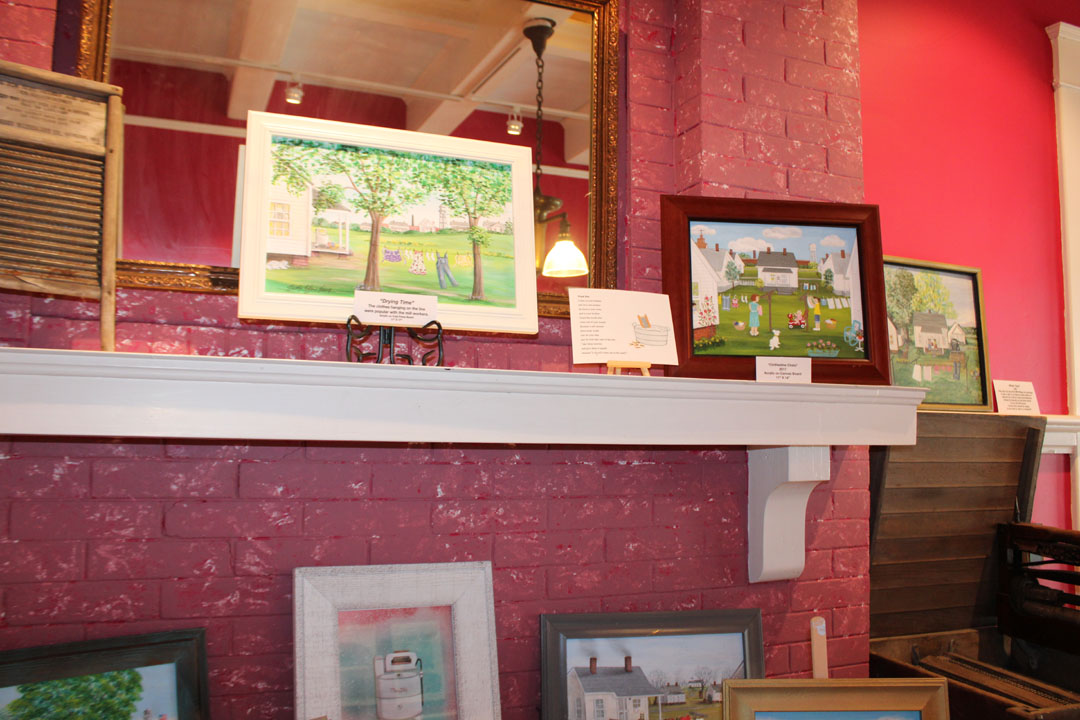
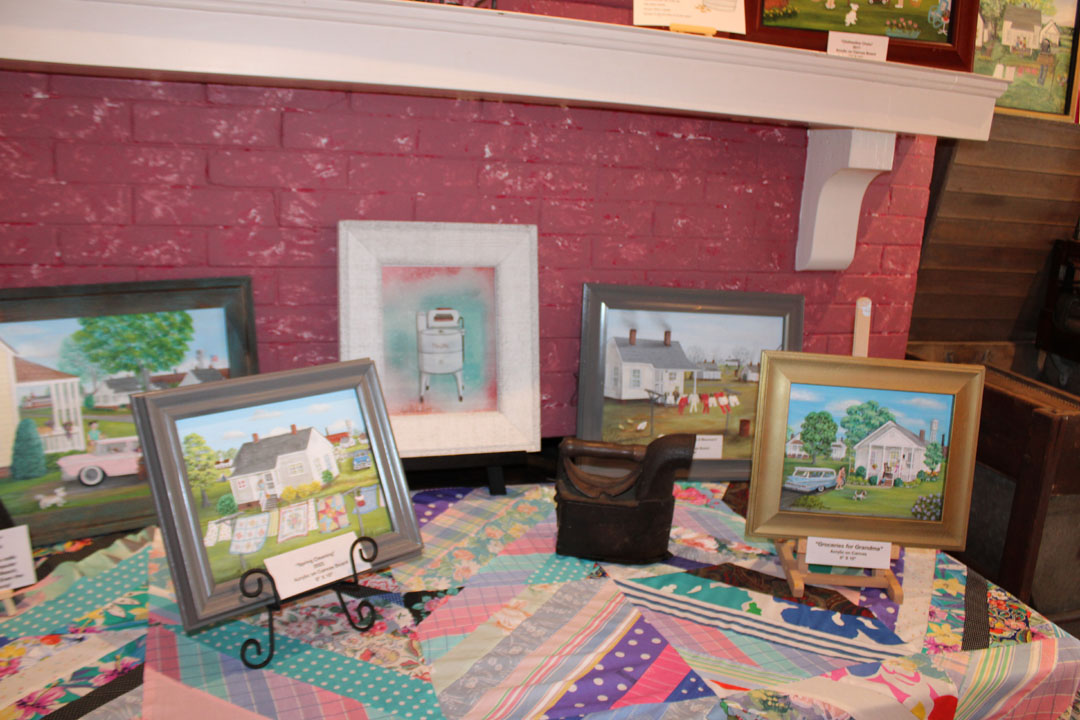
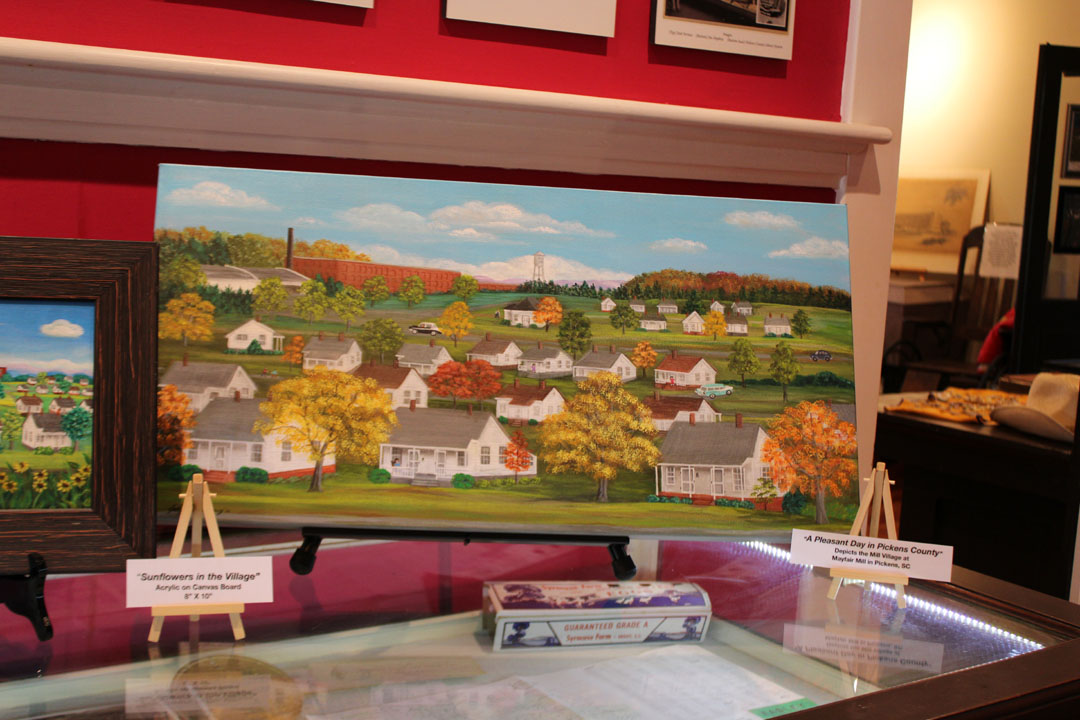
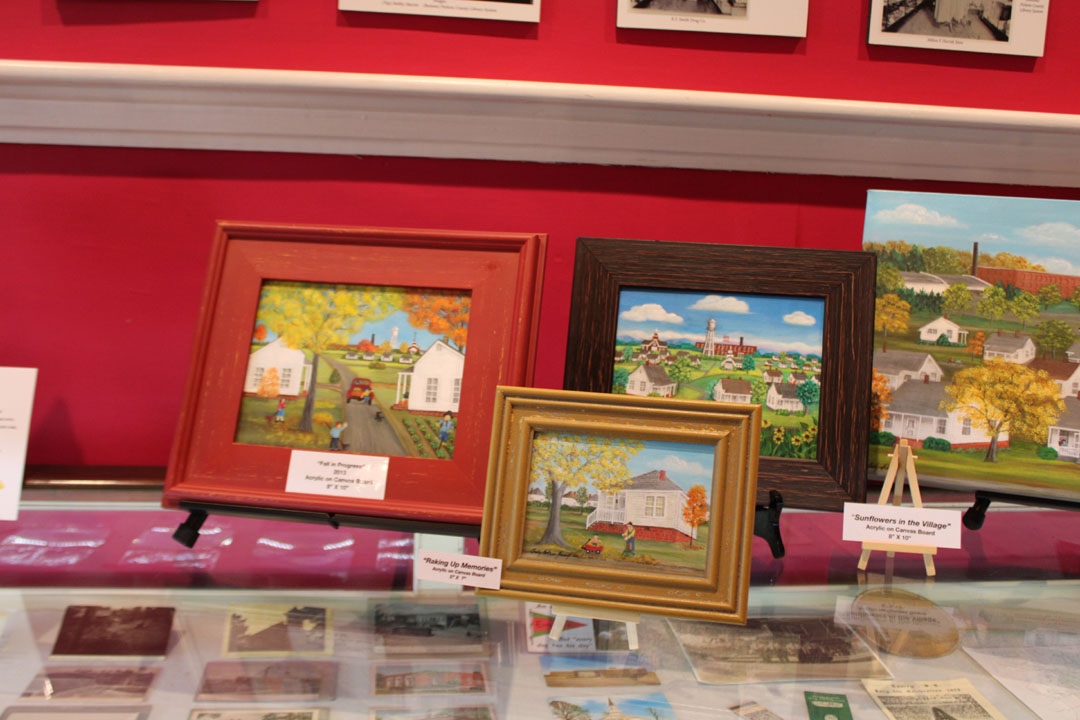
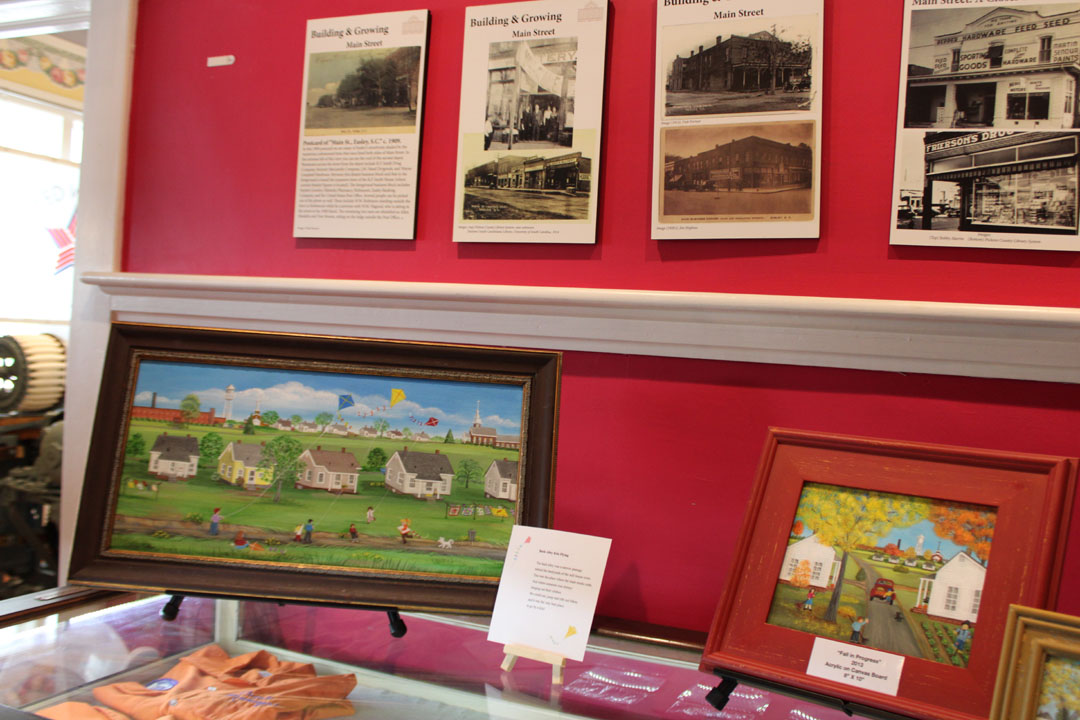
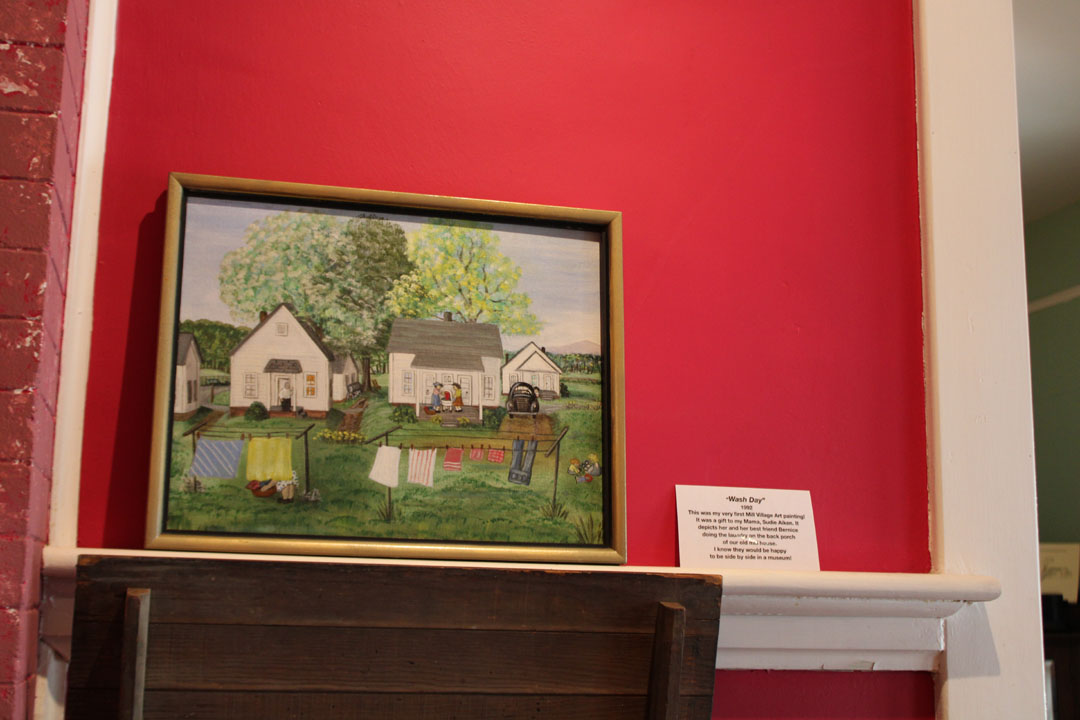
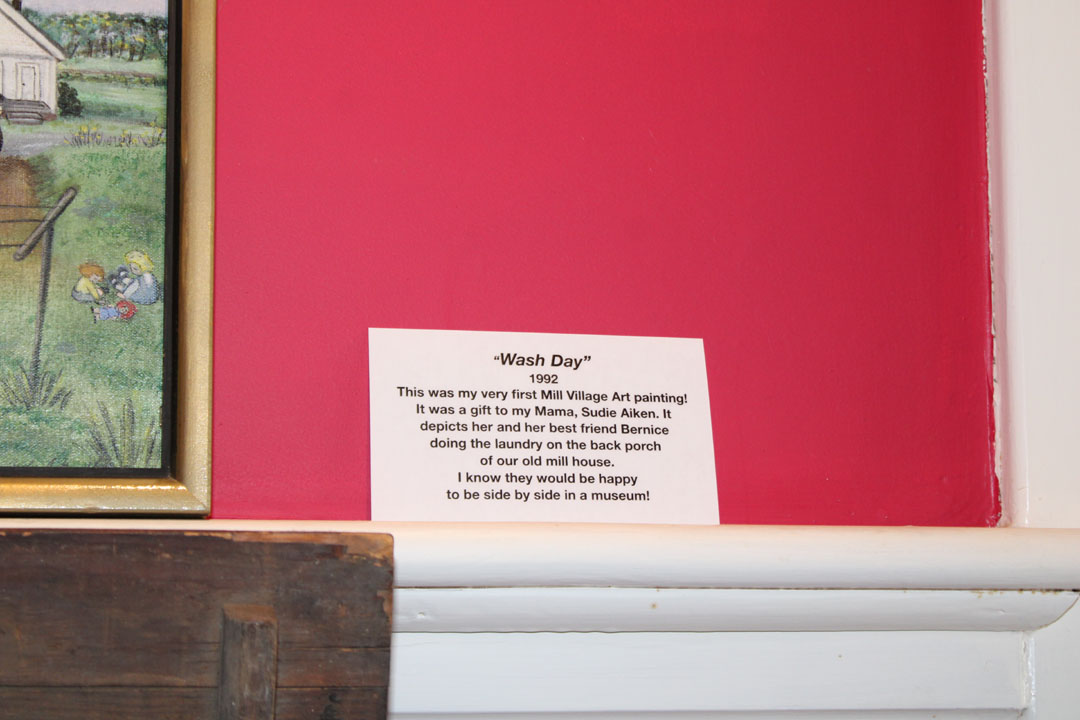
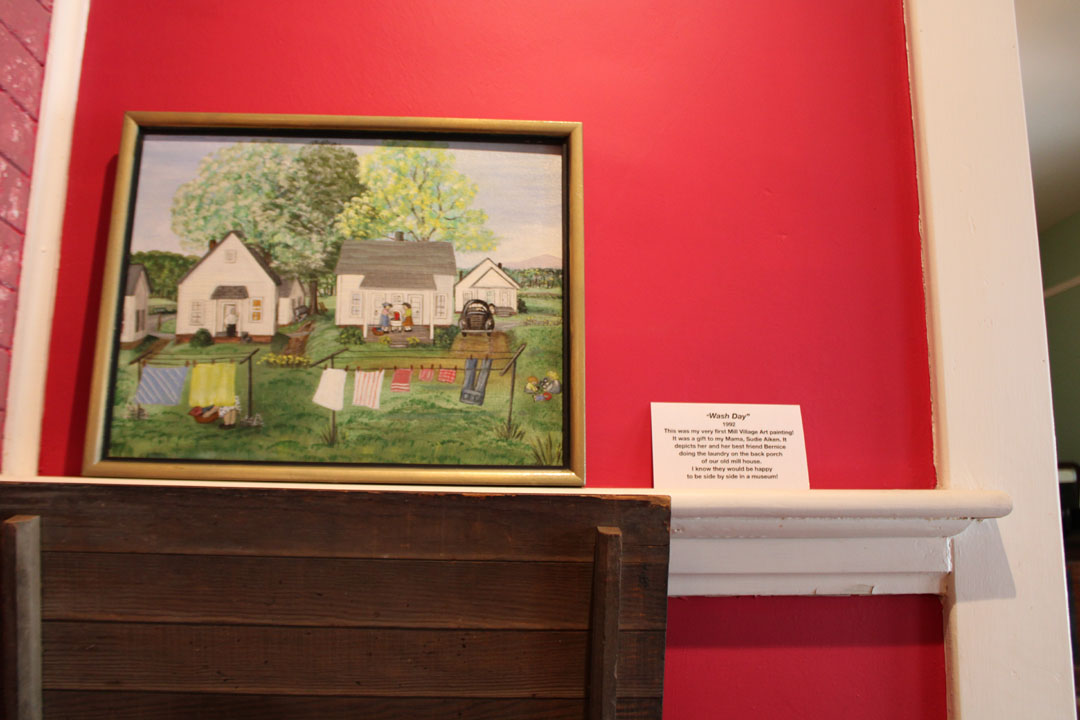
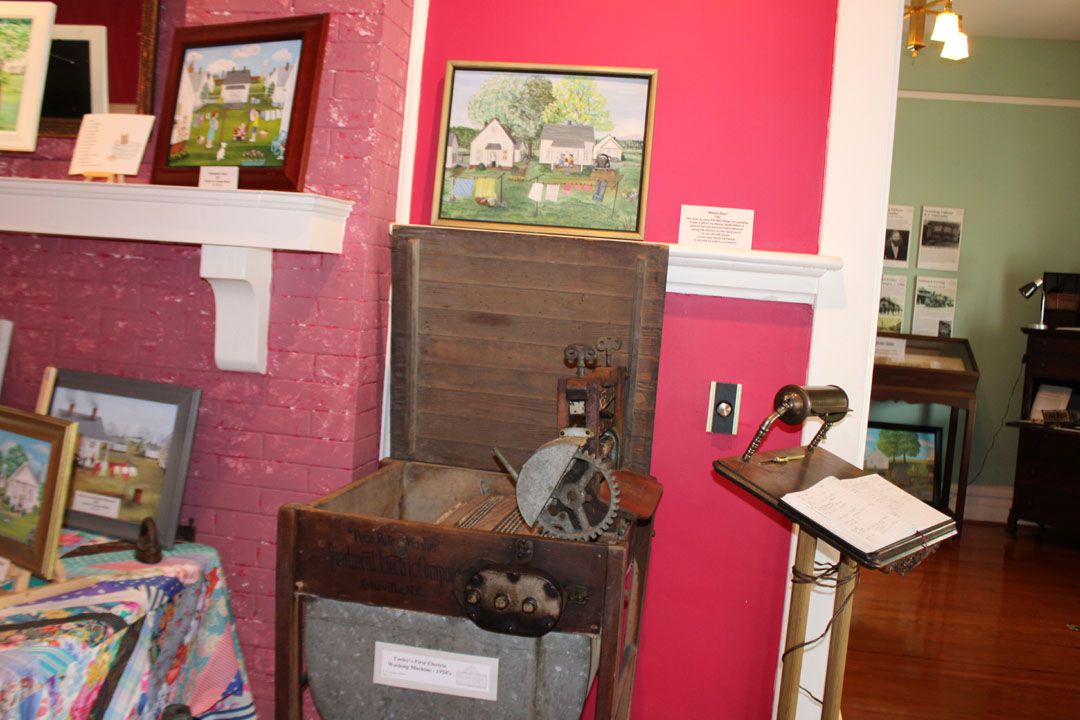
Mill Village artwork by artist Judy Aiken Young is on exhibit at the Easley Area Museum. (Photos by Karen Brewer, The Pickens County Chronicle)
Published October 14, 2025