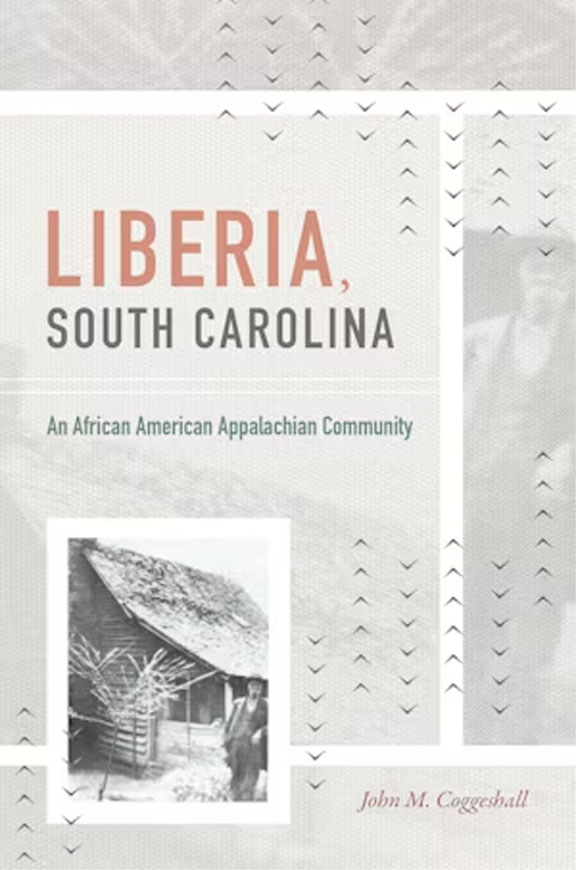
Mable Owens Clarke and Dr. John Coggeshall to speak on the book Liberia, South Carolina, an African American Appalachian Community on Tuesday, July 8
Mable Owens Clarke and Dr. John Coggeshall will speak on the book Liberia, South Carolina, an African American Appalachian Community on Tuesday, July 8 as part of Clemson University’s Historic Properties’ ‘Brick by Brick: Constructing America’s Identities’ speaker series.
The event, in partnership with the Osher Lifelong Learning Institute (OLLI) and Clemson Annual Giving, will be held at the Cheezem Education Center, located at 100 Thomas Green Clemson Boulevard (off Issaqueena Trail and then Chapman Hill Road).
The event begins at 5:15 p.m. with hors d’oeuvres, with speakers from 6 p.m. to 6:45 p.m., questions and book signing from 6:45 p.m. to 7:15 p.m., and a tour of Fort Hill from 7:30 p.m. to 8:30 p.m.
The cost is $30 plus a fee of $3.85. Ample free parking is available at Patrick Square Town Center.
For more information, contact Rhonda Gray at 864-656-2241 or by email at rgray6@clemson.edu or contact Sarah White in the Annual Giving Office at 864-656-0934.
Clarke is both matriarch and historian of Soapstone Baptist Church, as well as a founding member of the Soapstone Preservation Endowment. Mable and her husband, Charles Davis, a trustee of Soapstone Church, work together to maintain the church, schoolhouse, cemeteries and the six acres of grounds upon which sets Soapstone Baptist Church.
Clarke was raised in the Jim Crow South, calling Liberia Valley home with Soapstone at the heart of the community. At 17 years old, Mable left for Boston for a better education and, 23 years later, returned home to assist her aging parents and their church. A deathbed promise to “never let the doors of Soapstone close” became Mable’s life’s work, and, since then, she has spent every day doing just that.
In 1865, the original Soapstone Baptist Church was built and founded by Mable’s great-grandfather. Other formerly enslaved families moved into the newly established Liberia Valley. A century later, the Ku Klux Klan burned the original Soapstone Church. In fundraising efforts to rebuild, Mable’s mother, Lula Owens, sold produce from the family farm and requested donations. After Lula passed, Mable faced a dwindling congregation, and, with a bright idea of bringing together the community, she began a monthly fish fry, a tradition that, for 22 years, helped to keep the doors of the church open.
Upstate Forever and other conservation organizations helped Mable to forever protect the church’s land from ever being developed and, therefore, saving its structures and cemeteries.
In recognition of her efforts, Mable has received the South Carolina Order of the Palmetto, the highest civilian honor of the state, and she has also received the South Carolina Governor’s Award. The legacy of Mable Owens Clarke has been well-established and rightfully honored.
Dr. John M. Coggeshall was born in Boston but was raised in the St. Louis area. He attended Southern Illinois University-Carbondale for his Ph.D. in anthropology. After a brief period of teaching at Radford University in Virginia, he came to Clemson University in 1988 and has been here ever since.
Coggeshall is a professor of anthropology in Clemson University’s Department of Sociology, Anthropology and Criminal Justice. His professional interests include American regional and folk groups and sense of place in southern Appalachia. Some of his significant publications include Something in These Hills: The Culture of Family Land in Southern Appalachia (University of North Carolina Press, 2022); Liberia, South Carolina: An African American Appalachian Community (University of North Carolina Press, 2018); Carolina Piedmont Country (University Press of Mississippi, 1996); Vernacular Architecture in Southern Illinois: The Ethnic Heritage (with J. Nast, SIU Press, 1988); and Symbols of Division: Plantations along South Carolina’s coast, Home Cultures, 5:1 (2008). His current research is A Slow Life but a Good Life: Stories from the Southern Appalachians (Manuscript accepted by Clemson University Press).